


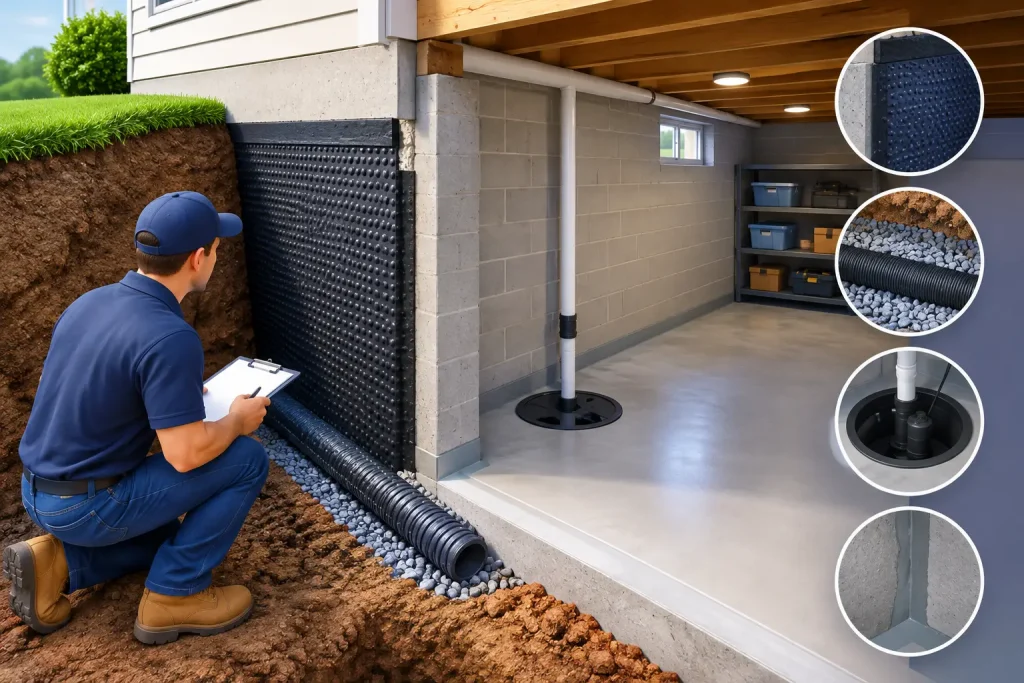
A wet basement is rarely just a wet basement. The water stain near the stairs, the musty smell after a hard rain, or the peeling paint along a foundation wall can point to a drainage issue, a foundation crack, failed waterproofing, or more than one problem at once. A useful basement waterproofing contractors review starts with whether a contractor identifies the actual source of water before selling a fix.
For homeowners, this work matters because a rushed repair can hide the symptom while moisture keeps damaging framing, flooring, stored belongings, and air quality. The right contractor should explain what they see, why it is happening, and what the proposed work will realistically accomplish.
Start With the Inspection, Not the Sales Pitch
The strongest contractor reviews often mention the inspection. That is a good sign, but homeowners should still ask what the inspection included. A contractor who looks only at one interior wall may miss the grading outside, clogged gutters, downspout discharge, window wells, plumbing leaks, or a crack that is allowing water through the foundation.
A careful assessment should consider when the water appears. Does it happen only during heavy rain? Does it come up through the slab after prolonged wet weather? Is moisture isolated to one corner, or is there humidity throughout the basement? These details help separate a surface drainage issue from hydrostatic pressure, a leaking pipe, or a wider foundation concern.
On Staten Island, older homes and changing site drainage can create problems that are not visible from inside the basement. A patio, walkway, or landscaping change may now direct water toward the house. In other cases, a finished basement covers the evidence a contractor needs to see. That does not automatically mean major demolition is necessary, but it does mean the diagnosis should be thoughtful.
Be cautious when a company recommends the same system for every house before asking basic questions. Interior drainage systems, exterior excavation, crack injection, sump pumps, and grading corrections can all be valid solutions. They are not interchangeable.
What a Basement Waterproofing Contractors Review Should Tell You
Online ratings are a starting point, not a decision. A five-star review that says only “great work” has less value than a detailed review describing the problem, the scope, communication, cleanup, and how the repair performed after rain.
Look for patterns across multiple reviews. Homeowners should pay attention to whether past customers consistently mention clear estimates, punctual crews, respect for the property, and contractors who return calls when questions come up. Waterproofing often involves concrete dust, excavation, demolition, or access through finished areas. A clean and organized job site is not a cosmetic extra. It usually reflects how the crew manages the project as a whole.
Detailed reviews can also reveal whether the company handles complications responsibly. Basement work can uncover deteriorated materials, concealed cracks, old drain failures, or finish work that needs to be removed and restored. No contractor can promise that every hidden condition will be known on day one. They should, however, explain how change conditions are documented, priced, and approved.
It is also worth reading the less-than-perfect reviews. One unhappy customer does not automatically disqualify a contractor. Look at the nature of the complaint and the company’s response. A professional contractor addresses issues directly rather than making excuses or disappearing once payment is collected.
Ask for Work Similar to Your Problem
A contractor may have excellent reviews for basement remodeling, masonry, or general repairs but limited experience with the particular water issue affecting your home. Ask to see examples that resemble your situation: wall cracks, seepage at the floor joint, exterior water intrusion, sump pump installation, or repairs before a basement renovation.
This is especially important if you plan to finish the basement afterward. Waterproofing should be solved before new framing, drywall, flooring, cabinetry, or custom built-ins go in. Covering a damp wall with finished materials is not a renovation plan. It is an expensive way to delay a repair.
Compare the Scope, Not Just the Price
Two estimates can differ by thousands of dollars because they are not proposing the same work. The lower number may leave out demolition, disposal, concrete restoration, drainage materials, electrical work for a pump, exterior grading, or replacement of damaged finishes. The higher number may include steps you do not need. Price only becomes meaningful when the scopes are clear.
A written proposal should identify the affected area, the work to be completed, materials or systems being installed, and what is excluded. If walls or floors must be opened, ask who is responsible for patching and restoration. If an interior drainage channel is being installed, ask where the water will discharge. If a sump pump is proposed, ask about power requirements, backup options, and maintenance expectations.
Do not be afraid to ask why a contractor recommends an interior system instead of exterior work, or the other way around. Interior drainage is often less disruptive and may be the practical choice when exterior access is difficult. Exterior waterproofing can address water before it reaches the foundation wall, but it can require excavation around landscaping, hardscaping, utilities, or tight property lines. The best answer depends on the building and the source of the water.
A vague estimate creates room for misunderstandings. A clear estimate protects both the homeowner and the contractor.
Questions Worth Asking Before You Hire
You do not need to be a construction expert to have a productive conversation. Ask the contractor what they believe is causing the moisture, what evidence supports that conclusion, and what could change the scope once work begins.
Also ask whether permits or inspections may apply, whether the crew is insured for the work, and who will supervise the project. For substantial repairs, it matters to know whether the person who inspected the job remains involved after the contract is signed. Homeowners deserve a clear point of contact, not a different answer from every person who arrives at the house.
Warranty language deserves the same attention as the work description. Find out exactly what is covered, for how long, and what conditions may limit coverage. A warranty on a crack repair is different from a guarantee that no water will ever enter a basement from any source. Honest contractors explain that distinction plainly.
Finally, discuss the schedule and protection plan. Will furnishings need to be moved? How will dust be controlled in a finished home? Will the crew protect floors, stairs, and access paths? Workmanship and cleanliness are part of the service, particularly when a repair affects spaces your family uses every day.
Watch for Red Flags That Cost More Later
Pressure to sign immediately is one of the clearest warning signs. Water problems feel urgent, especially after a storm, but a homeowner should still have time to review the proposal and compare a second opinion when the situation allows.
Be careful with contractors who diagnose major structural failure from a quick glance, refuse to put details in writing, demand a large cash payment, or promise a permanent solution without explaining the method. Another red flag is a contractor who focuses entirely on an interior patch while ignoring obvious outside drainage conditions.
A cheap coating applied to a damp wall may improve appearance for a while, but paint is not a cure for water pressure or poor drainage. Likewise, a sump pump can be valuable, but it should not become an excuse to ignore a crack, missing downspout extension, or water that is being directed toward the foundation.
Plan Repairs Before Remodeling Begins
For homeowners preparing a basement renovation, waterproofing is the first investment to protect. It is easier and less costly to address moisture before installing insulation, framing, sheetrock, flooring, and finish carpentry. Once the area is dry and the cause has been addressed, the basement can become useful living space instead of a recurring worry.
Clean Sweep Contracting approaches residential projects with that same practical mindset: identify what needs to be corrected first, keep the work organized, and build the finished space on a solid foundation. When water mitigation and renovation are coordinated properly, homeowners avoid the frustration of tearing out new work later.
The right contractor will not make the conversation confusing or pressure-filled. They will give you a straightforward explanation, a defined scope, and confidence that your home is being treated with the care it deserves.