


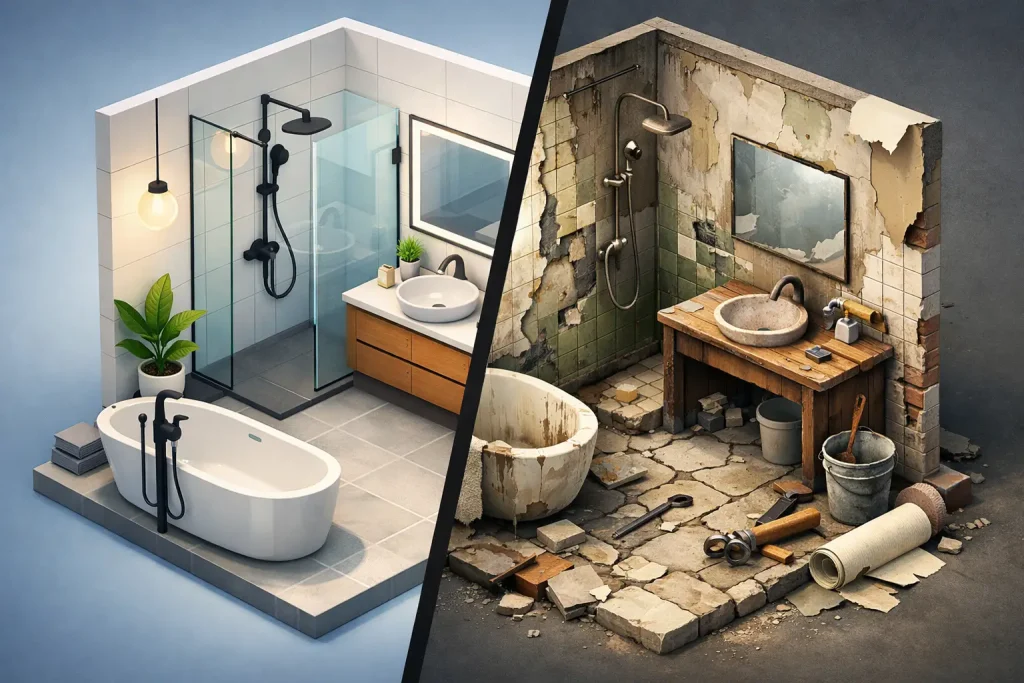
A bathroom remodel usually starts with one clear problem. The shower leaks. The tile is cracked. The layout feels tight. Or the room just looks tired every time you walk in. For most homeowners, this is not about chasing trends. It is about making a hardworking space cleaner, more functional, and built to last.
That is also where a lot of projects go sideways. People focus on finishes first, then get surprised by plumbing issues, uneven floors, weak ventilation, or a timeline that drags because no one planned the full scope. A good remodel looks sharp when it is done, but what really matters is what is behind the walls, under the tile, and in the workmanship.
What makes a bathroom remodel worth it
A well-built bathroom does two jobs at once. It improves your daily routine, and it protects your home. That second part matters more than many people realize. Bathrooms take constant moisture, temperature swings, and heavy use. If the waterproofing is sloppy or the ventilation is weak, small issues can turn into bigger repairs.
The best remodels are the ones that solve real problems first. Maybe that means replacing old plumbing while the walls are open. Maybe it means changing a tub to a walk-in shower because the current setup no longer fits your household. Maybe it means improving storage so the room finally stays organized instead of looking cluttered by noon.
Value is not only about resale. It is also about durability, comfort, and whether the room feels solid every single day. A homeowner can feel the difference between a quick cosmetic update and a properly executed renovation.
Start the bathroom remodel with the layout
Before picking tile or vanity colors, look at how the room works. Layout drives almost every other decision. If the toilet is cramped, the vanity blocks movement, or the shower door fights for space, expensive finishes will not fix the experience.
Sometimes keeping the existing layout is the smartest move. It can reduce plumbing changes, shorten the timeline, and keep costs under control. Other times, moving key elements is worth it, especially in older homes where the original bathroom was never designed for modern use.
This is where trade-offs come in. Relocating a shower or toilet may improve function, but it usually increases labor and coordination. On the other hand, staying with the same footprint can free up budget for better tile work, a stronger shower system, or custom storage. There is no one right answer. The right answer depends on how badly the current layout is holding the room back.
The shower is often the biggest decision
In many remodels, the shower sets the tone for the whole room. A larger walk-in shower can make the bathroom feel more open and easier to use. It can also be a smart choice for aging in place. But if your home only has one tub, removing it may not be the best long-term move, especially for families with young children.
This is where an experienced contractor helps. It is not just about fitting a new shower pan into the space. It is about slope, waterproofing, tile layout, trim details, and making sure the finished product feels clean and intentional, not forced into place.
Where to spend money in a bathroom remodel
Not every part of the project deserves the same budget. Some upgrades are visible the minute you walk in. Others are hidden, but they protect the investment.
Waterproofing is one area where cutting corners makes no sense. Neither does tile installation. If the prep work is off, the finished job will show it. Uneven lines, loose tiles, poor drainage, and cracked grout are usually signs that the problem started before the surface work ever began.
Ventilation is another smart place to invest. A bathroom that cannot manage moisture will struggle no matter how nice it looks on day one. Proper exhaust fans, installed and vented correctly, help prevent mildew, peeling paint, and long-term damage.
Then there are the daily-use items. Vanities, faucets, and shower fixtures should feel solid, not flimsy. You do not always need the most expensive option, but cheap hardware tends to show wear fast. In a room used every day, that matters.
Where you can be practical
Some choices come down to where style meets budget. For example, porcelain tile can give you a clean, high-end look without the maintenance some natural stone requires. Prefabricated vanity options can work well if the room dimensions are standard and storage needs are simple. Even lighting can be done smartly without overbuilding the space.
The point is not to spend less just to spend less. It is to spend where performance matters and be practical where it does not hurt the result.
Materials that actually hold up
Bathrooms are tough on materials. That is why the right selection matters as much as the design itself.
Porcelain remains one of the most reliable choices for floors and walls because it handles moisture well, comes in a wide range of styles, and stands up to wear. Large-format tile can create a cleaner, more open look, but it also requires precise installation. If the walls or floor are not properly prepared, the finished surface will tell on the installer.
Quartz is a strong option for vanity tops because it is durable and low maintenance. Solid wood vanities can look great, but in a humid room, quality construction and proper finishing matter. Paint, trim, and moulding should all be chosen with moisture in mind.
This is one reason full-service remodeling matters. A bathroom is not one trade. It is framing, plumbing, electrical, tile, finish work, paint, and cleanup. If those pieces do not come together under clear direction, the final result can feel uneven even when each individual part looked fine on paper.
The biggest mistakes homeowners make
One of the most common mistakes is underestimating the hidden work. A bathroom may look like a surface-level project, but once demolition starts, older homes can reveal damaged subfloors, outdated plumbing, poor framing, or past patch jobs that need to be corrected.
Another mistake is hiring based on the lowest number instead of the clearest plan. A low estimate can leave out key steps that only show up later as change orders, delays, or lower-quality work. Homeowners are often not comparing the same scope, even when they think they are.
There is also the mistake of trying to force too much into a small room. Bigger vanities, oversized tile patterns, extra niches, heavy glass, and too many finishes can make the space feel crowded instead of polished. Good design is not about adding more. It is about making the room feel intentional.
What to expect during the process
A bathroom remodel causes disruption. There is no point pretending otherwise. The goal is to manage that disruption with a clean jobsite, clear communication, and a realistic sequence of work.
Demolition is the loud, messy phase, but it moves quickly. After that, the project becomes about coordination. Plumbing and electrical rough-ins need to happen at the right time. Surfaces need to be prepared correctly. Waterproofing cannot be rushed. Tile setting, grouting, trim, painting, fixture installation, and final punch work all depend on the earlier steps being done right.
This is where homeowners notice the difference between a crew that is simply showing up and a contractor who is actually running the project. Accountability matters. So does cleanliness. In an occupied home, that is not a small detail.
For homeowners in Staten Island, where many homes have older construction and layouts that were not built for modern expectations, experience matters even more. A bathroom that looks simple from the outside can hide plenty of complications once the work begins.
A bathroom remodel should feel solid when it is done
The best bathroom is not always the flashiest one. It is the one that feels right every morning. The shower drains properly. The tile lines are clean. The vanity fits the space. The room is easier to maintain, and nothing feels loose, rushed, or halfway finished.
That kind of result does not come from guesswork. It comes from planning, craftsmanship, and a contractor who takes ownership of the job from start to finish. Clean Sweep Contracting approaches bathroom work the same way it approaches every remodel – with hands-on attention, detail-driven execution, and respect for the home.
If you are thinking about your own bathroom remodel, start with what is not working and build from there. The right plan is not the one with the most upgrades. It is the one that gives you a cleaner, stronger, better-built room you can count on for years.