


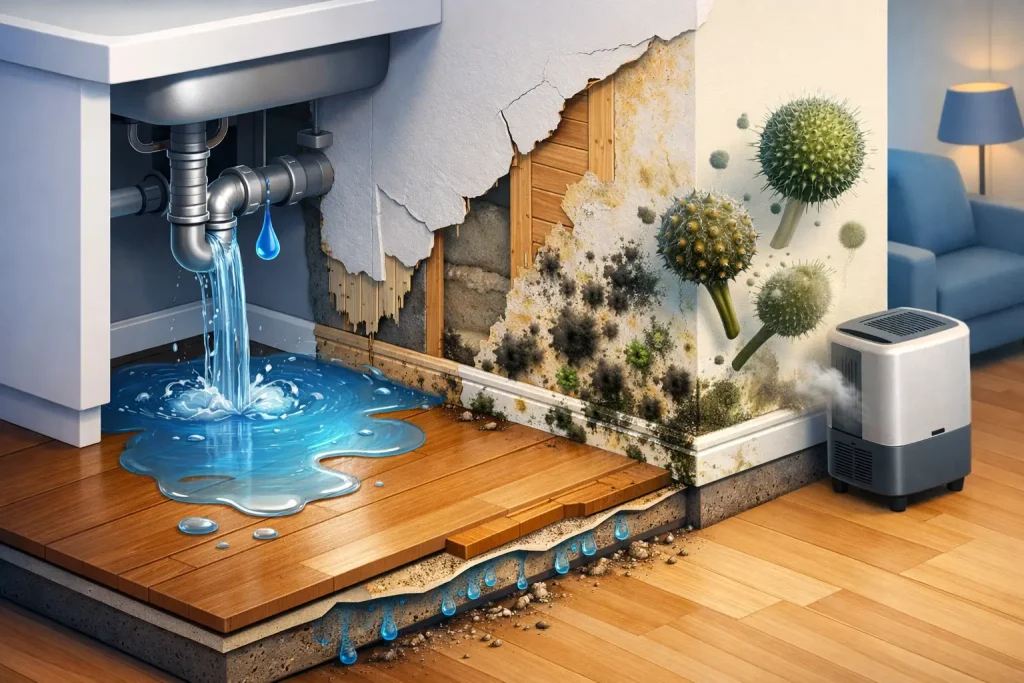
A ceiling stain after a small leak might not look like a big deal. A damp basement wall might seem like something you can get to next weekend. But if you are asking can water damage cause mold, the short answer is yes, and it can happen faster than most homeowners expect.
Mold does not need a major flood to start growing. It needs moisture, a surface it can feed on, and enough time to spread before the area is properly dried. That is why a slow pipe leak behind a wall can be just as serious as a burst line under the sink. In many homes, the real damage is what gets trapped out of sight.
Can water damage cause mold in every case?
Not every water issue leads to mold, but the risk is always there. The biggest factor is how long the material stays wet. If water is cleaned up immediately and the area is dried fully, you may avoid mold growth altogether. If moisture lingers inside drywall, under flooring, behind trim, or inside insulation, that is where problems usually begin.
In general, mold can start developing within 24 to 48 hours under the right conditions. That does not mean you will always see black spots on day two. It means the growth process may already be underway even if the surface still looks normal.
This is where homeowners get caught off guard. The visible water may be gone, but trapped moisture remains. Once that happens, paint, sheetrock, wood framing, baseboards, and subfloors can all become part of the problem.
Why water damage turns into mold so quickly
Most homes are full of materials mold likes. Drywall paper, wood, dust, insulation, and even fabric all give it something to feed on. Add warmth and poor airflow, and you have ideal conditions.
Bathrooms, basements, kitchens, laundry rooms, and areas around windows are common trouble spots. So are roof leaks and plumbing leaks inside walls. The issue is not just the water itself. It is the combination of moisture and delay.
A small leak that continues for weeks is often worse than a one-time spill that gets dried the same day. Slow leaks keep reintroducing moisture, and because they are less dramatic, they often go unnoticed longer.
That is why proper mitigation matters. Drying the surface with towels or a fan may help, but it does not always solve what is happening underneath.
The first signs homeowners usually miss
Mold is not always obvious at first. Sometimes it starts with a smell before you ever see a stain. Other times, the warning sign is a material that looks slightly swollen, loose, or warped.
Watch for musty odors, bubbling paint, discoloration on ceilings or walls, soft drywall, lifting floors, and trim that starts separating from the wall. In a basement, you might notice a persistent damp smell even when there is no standing water. In bathrooms, grout and caulk issues can hide moisture getting into the wall system.
If someone in the house starts noticing more allergy-like symptoms in one specific room, that can be another clue. It does not prove mold on its own, but it should not be ignored when there has been a known leak or moisture issue.
Which kinds of water damage are most likely to cause mold?
Some situations raise the risk more than others. Clean water from a supply line is one thing if caught early. Water from a long-term roof leak, sewer backup, appliance failure, or groundwater intrusion is a different story.
The highest-risk cases usually involve hidden moisture or repeated exposure. That includes leaking shower pans, failed window flashing, foundation seepage, ice dam damage, pipe leaks inside wall cavities, and wet insulation that never got removed.
Basements are especially vulnerable because they already tend to have higher humidity and lower airflow. If water enters and the area is not dried professionally, mold can take hold in framing, flooring, and lower wall sections quickly.
For homeowners in older homes, there is another layer to this. Aging plumbing, older window installations, and past repairs done the wrong way can all create slow, recurring moisture problems that stay hidden until the damage is more extensive.
What happens if you only fix the stain and not the moisture?
This is where a lot of repair jobs go wrong. Covering a water stain with primer and paint may improve the look of the room, but it does nothing if the material behind it is still wet or contaminated. The same goes for replacing one damaged section without finding the source.
Mold problems continue when the moisture source is left unresolved. You can patch drywall, repaint a ceiling, or swap out trim, but if the leak is still active or the cavity was never dried properly, the issue comes back.
A good repair starts with the cause. Was it a roof issue, plumbing leak, failed caulk line, poor bathroom ventilation, cracked grout, or water entering through the foundation? Until that is answered, cosmetic work is just a temporary cover-up.
When drying is enough and when demolition is needed
It depends on the extent of the water exposure, how long the area stayed wet, and what materials are affected. A quick spill on a tile floor may only need cleanup and drying. A leak that soaked drywall, insulation, engineered flooring, or cabinetry for days is different.
Porous materials often cannot be trusted once they have stayed wet too long. Drywall loses integrity. Insulation holds moisture. Wood can swell or cup. Flooring adhesives can break down. Even if some of these materials dry later, the damage may already be done.
That is why some water damage jobs require opening walls, removing affected materials, treating the area properly, and rebuilding it the right way. It is not about doing more work than necessary. It is about avoiding a bigger problem later.
At Clean Sweep Contracting, that practical approach matters because homeowners do not just need a patch. They need the issue handled from mitigation through repair so the finished work actually lasts.
Can water damage cause mold after the area looks dry?
Yes, and this is one of the most frustrating parts for homeowners. A room can appear dry while moisture is still trapped behind the surface. That is common in wall cavities, under flooring, around tubs, and beneath cabinets.
The outside may feel normal to the touch, but the internal moisture level can still be high enough for mold growth. That is why visible dryness is not always a reliable test. If there was enough water involved, deeper inspection is often the smart move.
This matters even more after storm damage or an appliance leak. Water travels. It can run behind baseboards, into adjacent rooms, and under finish materials long before you realize the full spread.
How to lower the chances of mold after water damage
Speed is the biggest advantage you have. The sooner the water source is stopped and the affected area is dried, the better your odds. Good airflow, dehumidification, removal of soaked materials when needed, and prompt repair all make a difference.
Homeowners can help by acting fast, but there is also a point where the right move is bringing in experienced help. If the water reached drywall, insulation, wood flooring, finished basements, or multiple rooms, guessing is risky. The job needs to be handled thoroughly, not halfway.
It also helps to think beyond the immediate cleanup. If your bathroom keeps trapping humidity, your basement always feels damp, or a window has leaked more than once, those are not isolated annoyances. They are conditions that keep inviting the same problem back.
The real cost of waiting
Waiting usually makes the repair more expensive. What starts as a small leak can turn into drywall replacement, trim work, flooring repair, repainting, and deeper remediation if mold spreads. It can also delay other renovation plans because the damaged area has to be addressed first.
For homeowners trying to protect their property value, this is not just about appearance. Water damage and mold affect the structure, the finishes, and the comfort of the home. If you catch it early, the fix is usually more straightforward. If you wait, the scope often grows.
If something in your home smells musty, looks stained, feels soft, or keeps getting damp, trust what you are seeing. Water problems rarely improve on their own. The right next step is to find the source, dry the area properly, and repair it with the same attention you would want in any part of your home.