


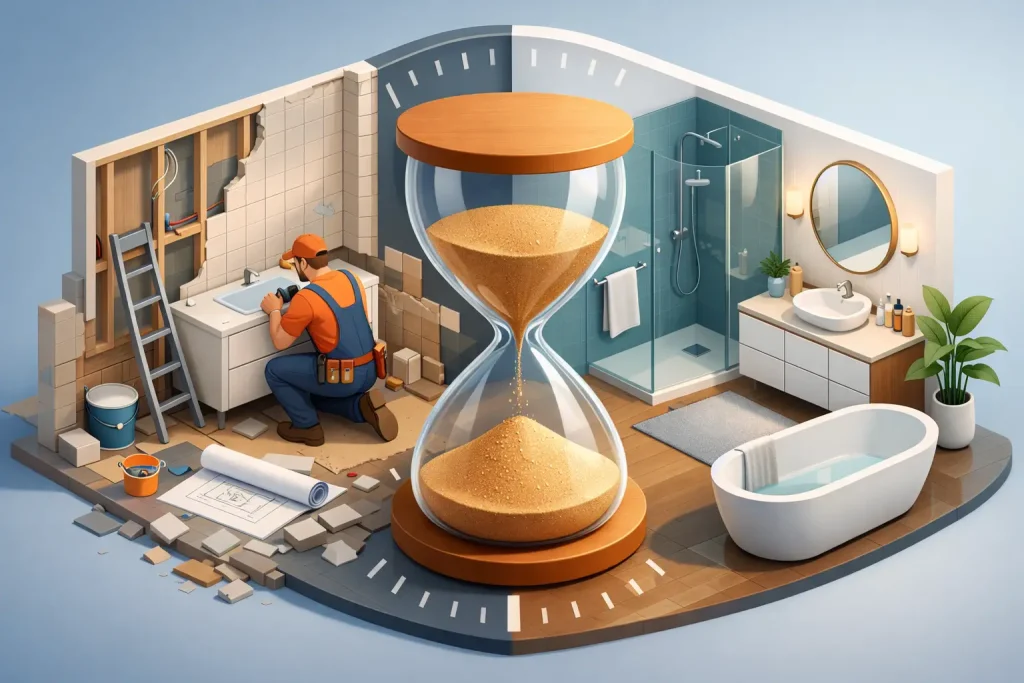
If you are planning around one working bathroom, school schedules, or tenants moving in, the question gets real fast: how long does bathroom renovation take? Most bathroom remodels take anywhere from 2 to 6 weeks once construction starts, but that range only tells part of the story. The real answer depends on what you are changing, what you uncover behind the walls, and whether your contractor is running the job from start to finish with a clear plan.
A simple cosmetic refresh moves much faster than a full gut renovation. New paint, a vanity swap, updated lighting, and fresh fixtures can sometimes be wrapped up in a week or two. Once you start moving plumbing, replacing tile, changing a tub to a walk-in shower, or correcting old water damage, the schedule gets longer for good reason. Better work takes coordination, and bathrooms pack a lot of labor into a small footprint.
How long does bathroom renovation take for most homes?
For most homeowners, a standard full bathroom renovation takes about 3 to 4 weeks of on-site work. That usually includes demolition, plumbing and electrical updates, inspections if needed, waterproofing, tile installation, fixture setting, painting, and finish work. If materials are in stock and the scope is straightforward, the process can stay on the shorter end.
The timeline stretches when the project is more custom or when the existing bathroom has problems hiding beneath the surface. In older homes, it is common to open a wall and find out the framing is out of level, the subfloor is soft, or plumbing needs more work than expected. None of that is unusual. It just means the contractor needs to fix the room the right way before the finishes go in.
Pre-construction matters too. Homeowners often think of the renovation timeline as the day demo begins, but product selection, measurements, ordering, permit approval, and scheduling all happen before that. In practice, the total process from first estimate to final touch-up can easily run 4 to 8 weeks or longer, even if the physical construction only takes a few weeks.
A realistic bathroom renovation timeline, phase by phase
Every contractor runs jobs a little differently, but the general sequence is fairly consistent when the work is organized well.
Planning and product selection
This phase can take a few days or a few weeks, depending on how quickly decisions are made. If you already know the tile, vanity, fixtures, mirror, lighting, and paint color, things move faster. If you are still comparing finishes or waiting on a custom vanity, this is often where the schedule starts to drift.
This is also the time to lock in the scope. Homeowners sometimes begin with, “just update the bathroom,” then add recessed lighting, heated floors, niche shelving, upgraded trim, and a glass enclosure after the job is underway. Those choices can improve the final result, but they can also affect labor sequencing and lead times.
Demolition
Demolition usually takes 1 to 2 days for a standard bathroom. That includes removing old fixtures, tile, flooring, drywall where needed, and hauling debris out cleanly. In some bathrooms, demo reveals a room that is ready for the next trade. In others, this is when hidden damage shows up.
Water damage around tubs and toilets is common. So are old patch jobs, uneven walls, and aging shutoff valves that should have been replaced years ago. A professional contractor does not bury those issues under new tile. They stop, correct the problem, and keep the project moving in the right direction.
Rough plumbing, electrical, and framing
This stage often takes 2 to 5 days, depending on complexity. If the layout stays the same, the work is usually quicker. If you are relocating a toilet, widening a shower, adding lighting, or reframing walls for a niche or medicine cabinet, add more time.
This part of the project is not glamorous, but it is where long-term quality is built. Clean plumbing connections, safe wiring, solid framing, and proper backing for grab bars or accessories make a real difference after the job is done. In homes across Staten Island, especially older ones, bringing these systems up to current standards can be one of the smartest parts of the investment.
Inspections and approvals
If permits are required, inspections can add time between phases. Sometimes the inspection is next day. Sometimes the schedule depends on municipal availability. That is one of the reasons bathroom remodels are hard to promise down to the exact day from the start.
A good contractor plans around this as much as possible, but no one controls the inspector’s route or calendar. What matters is having the work ready, documented properly, and not scrambling at the last minute.
Wall prep, waterproofing, and tile
This is often the most time-intensive part of the job. Depending on the amount of tile and the complexity of the design, this phase can take 4 to 10 days. Large-format tile, custom patterns, shower niches, bench seats, and detailed trim work all add labor.
Waterproofing should never be rushed. A bathroom can look beautiful on day one and still fail later if the shower system was installed carelessly. Setting tile also involves cure times, leveling, grouting, and cleaning. This is one of those places where trying to save two days can cost you years of aggravation.
Fixture installation and finish work
Once surfaces are ready, the bathroom starts looking finished quickly. Toilets, vanities, faucets, lighting, mirrors, shower trim, doors, and accessories are installed during this stage. Painting, trim, caulking, and punch-list work usually happen here too.
This final phase often takes 2 to 4 days. It sounds simple, but finish work is where attention to detail shows. Crooked hardware, sloppy caulk lines, chipped corners, and rushed paint are what homeowners notice first. The last few days matter as much as the first few.
What can make a bathroom renovation take longer?
The biggest delays usually come from changes in scope, missing materials, and hidden conditions. If the vanity arrives damaged, if the tile is backordered, or if the shower valve is the wrong spec, the schedule can stall. Even one missing item can hold up the next trade.
Layout changes also add time. Keeping plumbing fixtures in the same locations is usually the fastest route. Moving a toilet or changing a tub to a fully tiled shower can absolutely be worth it, but it is more involved. More labor, more coordination, and often more inspection steps.
Custom work is another factor. Built-in storage, upgraded stone, specialty glass, heated flooring, or detailed finish carpentry create a better end result, but not a faster one. Homeowners should know the trade-off up front. Faster is not always better, and custom is rarely quick.
Then there is the age of the house. In older bathrooms, it is common to find outdated plumbing lines, nonstandard framing, or layers of previous repair work. A contractor who does this every day expects those possibilities and builds in some room for them. The wrong move is pretending every bathroom is a clean, easy job when it is not.
How to keep your bathroom remodel on schedule
The best way to protect the timeline is to make decisions before work begins. Choose fixtures, tile, paint, and accessories early, and confirm that everything is on site before demolition starts. This alone prevents a lot of avoidable downtime.
It also helps to work with one contractor who can manage the full scope. Bathrooms move through demo, framing, plumbing, electrical, tile, painting, and finish work in a tight sequence. If too many moving parts are split between separate crews with no clear lead, delays stack up. One accountable team tends to keep the schedule tighter and the communication cleaner.
Homeowners should also leave some breathing room in their expectations. If your contractor says 3 to 4 weeks, that does not mean they are dragging their feet. It usually means they are giving you a realistic range based on real job conditions, not just telling you what sounds good in the estimate.
So, how long does bathroom renovation take if you want it done right?
If the project is straightforward and well planned, expect around 2 to 3 weeks for a smaller cosmetic update and 3 to 6 weeks for a full renovation. Add time for permits, custom materials, or structural and plumbing corrections. That may feel longer than you hoped, especially if it is your main bathroom, but a rushed remodel usually shows its flaws fast.
The better question is not only how quickly the bathroom can be finished. It is whether the work will still look right, function properly, and hold up years from now. A good bathroom renovation should inconvenience you once, not keep coming back to do it again.