


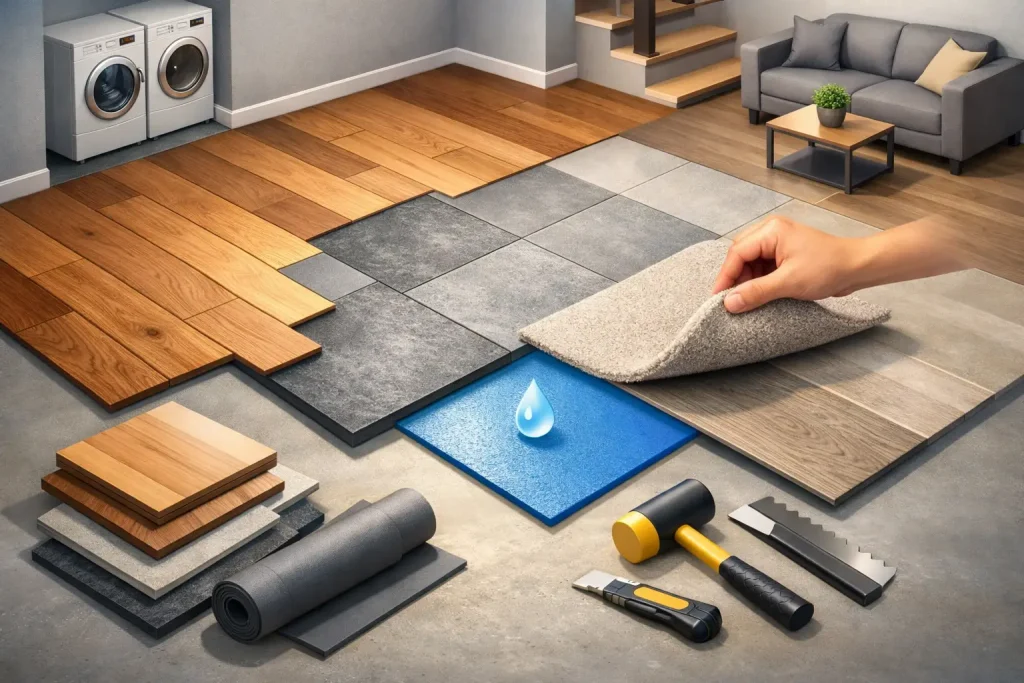
A basement floor has a tougher job than almost any other floor in the house. It sits on or near a concrete slab, faces cooler temperatures, and may be exposed to moisture that never reaches the rooms upstairs. Knowing how to choose basement flooring means looking beyond color samples and price tags. The best choice has to fit the condition of the space, how your family will use it, and the level of protection the basement really needs.
For Staten Island homeowners, that often starts with an honest look at the room before any finish material is ordered. A basement can become a comfortable family room, home gym, office, playroom, guest space, or rental area. But no flooring product can make up for a damp slab, an active leak, or poor drainage around the home.
Start With Moisture, Not Material
Before selecting flooring, determine whether water is part of the basement’s story. Look for musty odors, staining along the walls, peeling paint, efflorescence on concrete, or damp spots after heavy rain. Check around pipes, foundation walls, exterior steps, and window wells. Even a basement that feels dry can have elevated moisture vapor moving through the concrete.
This step matters because flooring failures are expensive and frustrating. Wood can cup or separate. Adhesives can release. Carpet padding can hold moisture and odors. A beautiful finished basement can quickly turn into a tear-out if the source of water was never addressed.
If there is an active issue, handle it first. That may mean repairing a leak, improving exterior drainage, sealing penetrations, adding a sump pump, or completing water mitigation work. Once the space is dry and stable, a contractor can evaluate the slab and recommend the right moisture barrier, underlayment, or floor-prep system for the material you want.
Decide How the Basement Will Be Used
A basement lounge does not need the same floor as a laundry room or a workout area. Think about the room’s real purpose, not just the image you have during planning.
For a kids’ playroom or family room, warmth, comfort, and easy cleanup usually lead the decision. For a home gym, impact resistance and a stable surface matter more. An office may call for a polished, quieter finish, while a utility area benefits from a floor that can handle occasional water and heavy use without concern.
Also consider traffic. If the basement has an exterior entrance, a pet door, or regular use by teenagers and guests, the floor needs to tolerate dirt, moisture, and scuffs. A less delicate material may be the smarter long-term investment, even if another option looks slightly better in a showroom.
Compare the Best Basement Flooring Options
There is no single best basement floor for every home. The right material depends on moisture conditions, budget, desired appearance, and use of the room.
Luxury Vinyl Plank and Tile
Luxury vinyl plank, often called LVP, is one of the most practical choices for finished basements. It is water-resistant or waterproof depending on the product, comfortable underfoot compared with tile, and available in wood-look and stone-look styles. It also holds up well against everyday family traffic.
A quality vinyl floor can work especially well over a properly prepared concrete slab with the right underlayment. It is not automatically the cheapest route, though. Better products have thicker wear layers, stronger locking systems, and more realistic finishes. Subfloor preparation still matters because uneven concrete can telegraph through the floor or cause locking joints to fail over time.
Tile and Porcelain
Porcelain tile is one of the most durable flooring choices for a basement. It handles moisture well, resists scratches, and gives homeowners a wide range of colors, sizes, and finishes. For basements with a higher moisture risk, tile is often a dependable option because it will not swell like wood-based materials.
The trade-off is comfort. Tile can feel cold and hard, particularly in a basement that already runs cool. Area rugs, radiant heat, or a warmer finish selection can help. Proper installation is also critical. The concrete needs to be sound, flat enough for the tile size, and prepared to prevent cracking problems from transferring through the finished floor.
Engineered Hardwood
Homeowners who want a true wood look may consider engineered hardwood. Unlike solid hardwood, engineered boards are built in layers, which gives them greater stability in changing conditions. Still, engineered wood is not a free pass for a damp basement.
It performs best in a dry, climate-controlled space with proper moisture testing and preparation. Product specifications matter. Some engineered floors can be floated, while others require glue or nail-down installation, and not every product is approved for below-grade use. If the basement has any ongoing moisture concern, a vinyl or tile alternative may offer more peace of mind.
Carpet and Carpet Tiles
Carpet makes a basement feel warm, quiet, and inviting. It can be a good fit for a media room, playroom, or bedroom area where comfort is the priority. The risk is that conventional carpet and padding can hold moisture if water enters the room, creating odors and making cleanup more difficult.
Carpet tiles are worth considering in lower-risk spaces because individual sections can be replaced if one area is damaged. When carpet is chosen, use a basement-appropriate pad or moisture barrier and make sure the room is truly dry before installation. Carpet is a comfort choice, not the safest choice for a basement with a history of water.
Epoxy or Sealed Concrete
For utility rooms, workshops, storage areas, and some modern finished basements, sealed concrete or an epoxy coating can be a strong option. It is easy to clean, durable, and does not add much height to the floor. It also works well when the goal is a straightforward, low-maintenance surface.
The finished look can be more industrial than cozy, and slab cracks or surface defects need attention before coating. Epoxy preparation is not a shortcut job. Concrete must be cleaned, repaired, and properly profiled so the coating bonds correctly.
Do Not Skip the Subfloor Question
The floor beneath the floor often determines whether a basement feels comfortable. Installing directly over concrete may be appropriate for tile, vinyl, or coatings, but it can leave the room colder and less forgiving underfoot. A raised subfloor system can create separation between the slab and finish flooring while helping with warmth and moisture management.
A subfloor also adds height, which may affect door clearances, stair transitions, baseboards, and ceiling height. In a basement with limited headroom, every inch counts. This is where planning the entire remodel together pays off. Flooring should be coordinated with framing, doors, trim, built-ins, and any finished bathroom or kitchenette, not treated as an afterthought.
Account for Basement Height and Transitions
Many homeowners focus on the room itself and forget the path into it. A new floor can change the height at the bottom of stairs, create an awkward threshold at a bathroom door, or interfere with an exterior door swing. These details are small on paper but obvious once the project is complete.
A professional installer plans for clean transitions between materials and rooms. They also check whether the slab is level, whether floor drains need to remain accessible, and whether the selected flooring can handle the basement’s temperature swings. Clean finish work is built on this kind of preparation.
Spend Where It Protects the Project
Basement flooring budgets should include more than the visible product. Moisture testing, crack repair, leveling, underlayment, subfloor materials, trim, transitions, and installation can all affect the final number. Choosing the lowest-priced plank or carpet without accounting for preparation is one of the quickest ways to create problems later.
That does not mean every basement needs the most expensive flooring available. It means the material and installation method should match the conditions. A well-installed mid-range vinyl floor in a dry, prepared basement will usually outperform a premium material installed over unresolved moisture or uneven concrete.
If you are planning a finished basement, start with the slab and build up from there. The floor should support the way your household lives, handle the conditions below grade, and still look clean years after the project is done. Clean Sweep Contracting approaches basement work with that full-picture mindset, because lasting results come from getting the details right before the final plank, tile, or carpet tile goes in.