


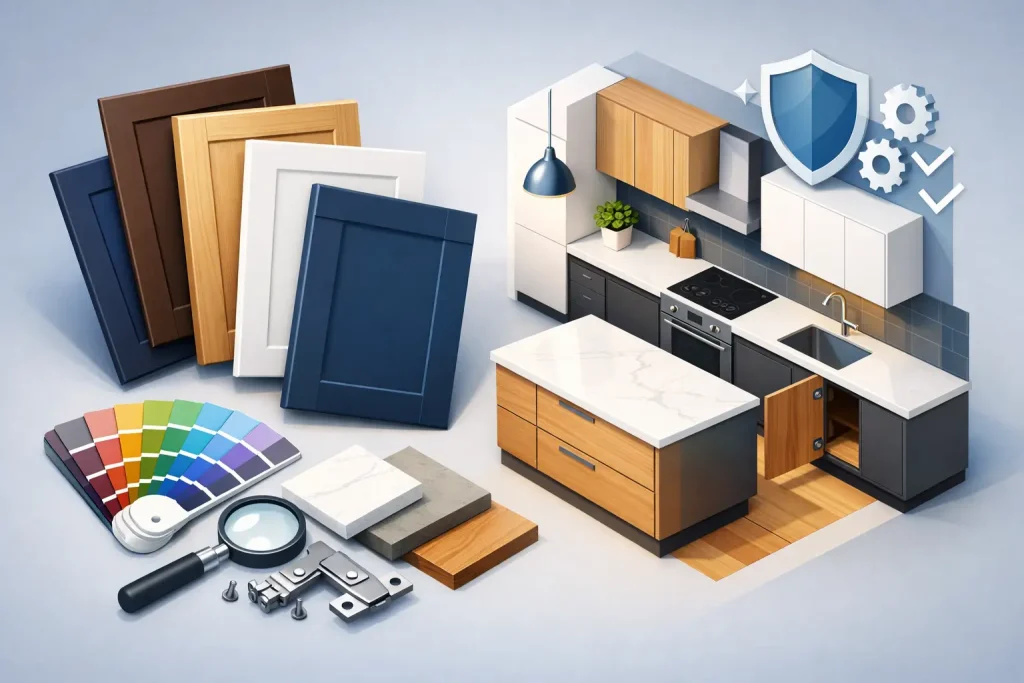
A lot of kitchen problems start with cabinets that looked good in a showroom and made no sense once real life moved in. Doors swing into each other. Drawers don’t hold what you actually use. Cheap finishes start showing wear fast. If you’re figuring out how to choose kitchen cabinets, the right answer is not just about color or door style. It’s about how your kitchen works every single day.
Cabinets do more than set the look of the room. They control storage, traffic flow, cleaning, durability, and a big part of your remodeling budget. Get them right, and the whole kitchen feels sharper and easier to use. Get them wrong, and even expensive counters and appliances won’t save the job.
How to choose kitchen cabinets starts with layout
Before you think about shaker vs. slab or white vs. wood tone, look at the room itself. The best cabinet choice depends on the footprint of the kitchen, where the windows and doors sit, how much wall space you have, and how you actually move through the space.
A small kitchen usually benefits from cleaner lines, smart storage, and a cabinet plan that avoids visual clutter. In a larger kitchen, you may have room for deeper drawers, a pantry wall, or an island with storage on both sides. Families who cook every day need different cabinet planning than homeowners who mainly want a polished entertaining space.
This is where people often overspend on features they don’t need and skip the upgrades they’ll use constantly. A blind corner solution may matter more than decorative glass doors. A bank of deep drawers can be more useful than a lower cabinet with one shelf. Good cabinet planning is practical first and decorative second.
Choose cabinet construction before you choose finishes
If you want cabinets that last, pay attention to how they’re built. This matters more than a trendy finish.
Solid wood doors are a strong choice and hold up well, but not every part of a cabinet has to be solid wood to be quality. Plywood cabinet boxes are generally a better long-term option than particleboard, especially in kitchens where moisture and heavy use are part of daily life. Drawer boxes should feel sturdy, not flimsy, and soft-close hardware should operate smoothly without feeling loose.
You also want to look at joinery and hardware. Dovetail drawers, full-extension glides, and durable hinges usually signal better overall construction. That doesn’t mean the most expensive cabinet is always the best value. It means you should understand where the money is going.
Stock cabinets can work well for straightforward layouts and tighter budgets. Semi-custom cabinets offer more flexibility in sizing, storage options, and finish choices. Custom cabinets make the most sense when the kitchen has unusual dimensions, you want a built-in look, or you need every inch of storage to work harder. The trade-off is cost and lead time. Custom gives you control, but not every kitchen needs it.
Pick a door style that matches the house
Cabinet style should fit the home, not fight it. That doesn’t mean everything has to look old-fashioned in a traditional house or ultra-modern in a newer one. It means the kitchen should feel like it belongs.
Shaker cabinets remain popular for a reason. They’re clean, versatile, and work in a wide range of homes. Flat-panel cabinets can look sharp in modern kitchens, but they can also feel cold if the rest of the room doesn’t support that look. Raised-panel doors bring more detail, though in smaller kitchens they can feel visually heavier.
When homeowners get stuck here, it usually helps to zoom out. Look at your flooring, trim, interior doors, and overall architecture. If your home has classic lines and warm finishes, an overly sleek cabinet style can feel out of place. If your home is more contemporary, ornate cabinet details may look forced.
A good kitchen remodel should feel updated without looking disconnected from the rest of the house.
Don’t let trends make the decision for you
Trends can help narrow your options, but they shouldn’t make the choice. Two-tone cabinets, bold colors, and open shelving all have their place. The question is whether they fit your kitchen and whether you’ll still like them in five or ten years.
For many homeowners, the safest long-term move is to keep the main cabinets classic and bring in personality through lighting, hardware, backsplash, or paint. That approach usually ages better and gives you more flexibility down the road.
Color matters, but so does maintenance
White cabinets are still a strong choice because they brighten the room and work with almost any design direction. They also show dirt, scuffs, and wear more easily, especially in busy family kitchens. Dark cabinets can add richness and contrast, but they may make a small kitchen feel tighter if there isn’t enough natural or artificial light.
Wood tones are back in a big way, and for good reason. They add warmth and character that painted finishes sometimes lack. They can also be more forgiving when it comes to day-to-day wear. The downside is that not every wood species or stain tone will work with every floor or countertop.
Finish quality matters here just as much as color. A cheap painted finish can chip or yellow. A poor stain job can look uneven. In a real working kitchen, easy cleaning and long-term appearance count just as much as first impression.
Storage should match how you actually live
The smartest way to choose cabinets is to think through what needs to live inside them. Pots and pans, food storage containers, spices, small appliances, serving platters, cleaning supplies, lunch bags, water bottles – these all need a place.
This is where drawer-heavy lower cabinets often beat traditional doors and shelves. Deep drawers make it easier to reach cookware without kneeling down and digging through stacks. Pull-out trash and recycling, tray dividers, spice storage, and vertical organizers can make the kitchen feel better without adding square footage.
If you have kids, convenience matters. If you cook often, prep zones matter. If you buy in bulk, pantry space matters. There’s no universal perfect setup. The right cabinet plan reflects your habits, not somebody else’s Pinterest board.
Upper cabinets vs. open space
Some kitchens benefit from full-height uppers that maximize storage. Others feel better with fewer upper cabinets, especially if you want the room to feel more open. The trade-off is simple – more storage usually means a fuller visual look, while less cabinetry can create breathing room but may force you to give up function.
If storage is already tight, don’t sacrifice useful cabinets just for a trend. Good design has to earn its keep.
Budget for the full cabinet job, not just the boxes
One of the biggest mistakes homeowners make is pricing cabinets without considering the full picture. The cabinet cost is only part of the investment. You also need to account for installation, trim panels, fillers, crown or finishing details, hardware, delivery, possible layout changes, and any prep work needed to make the room ready.
If the kitchen floor is out of level or the walls are uneven, installation gets more involved. If you’re changing the layout, electrical and plumbing adjustments may affect the cabinet plan. That’s why cabinet decisions work best when they’re made as part of the whole remodel, not in isolation.
A lower cabinet price can stop looking like a bargain once the limitations show up. Odd filler pieces, weak storage options, and poor fit can hurt both the appearance and function of the finished kitchen.
Work with someone who sees the whole job
Cabinets aren’t a standalone purchase. They have to work with appliances, flooring, countertops, lighting, backsplash, and trim. That’s where experience matters.
A contractor who understands full kitchen remodeling can help you avoid common mistakes before materials are ordered. That includes spacing issues, door swing conflicts, awkward corner access, uneven reveals, and finish choices that don’t sit well together. For homeowners in Staten Island, that kind of guidance can save time, money, and a lot of frustration during a renovation.
If you’re comparing options, ask practical questions. How durable is the cabinet box? What storage features are worth the upgrade? Will the style fit the rest of the house? How will the finish hold up with kids, cooking, and daily cleaning? Good answers should be clear, not vague.
Clean Sweep Contracting approaches kitchen work the same way we approach every remodel – with attention to detail, honest guidance, and a focus on results that hold up after the job is done.
When you’re deciding how to choose kitchen cabinets, think less about what looks impressive for five minutes and more about what will still feel right five years from now. The best cabinets are the ones that make your kitchen easier to live in every day.