


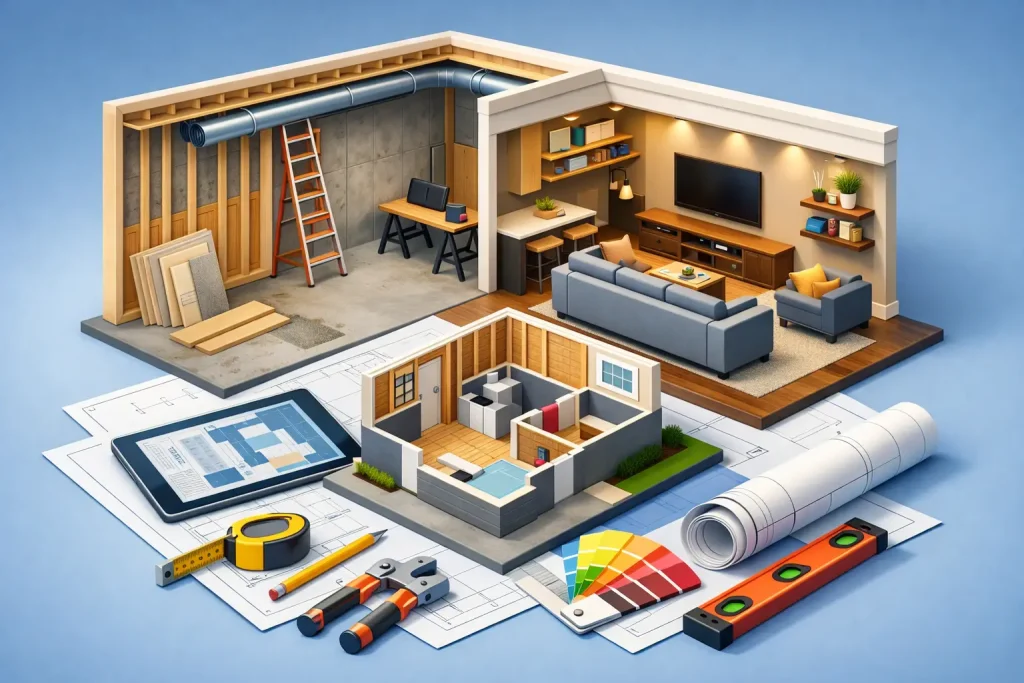
A basement can be the most underestimated square footage in the house. Homeowners usually see the potential first – more living space, a guest area, a playroom, a home office, maybe even a legal income-producing setup where allowed – but the part that decides whether the job goes smoothly is the planning. If you want to know how to plan basement renovation the right way, start before anyone swings a hammer.
A good basement remodel is not just about making the space look finished. It has to work with the conditions below grade, the structure above it, and the way your family actually lives. That means moisture, ceiling height, mechanical access, code requirements, and layout all matter just as much as flooring and paint color.
How to plan basement renovation without expensive surprises
The first step is to be honest about what your basement can support. A basement that looks dry in July may tell a different story after heavy rain, and a layout that seems open enough on paper can feel cramped once walls, insulation, and soffits are built. Planning well means checking the conditions you have, not the conditions you wish you had.
Start with moisture. If there is a musty smell, visible staining, efflorescence on masonry, old water marks, or a history of seepage, deal with that first. Finishing over a water problem is one of the fastest ways to waste money. Paint, flooring, framing, and trim all suffer when the underlying issue is ignored. Sometimes the fix is minor, like improving drainage or sealing a small entry point. Sometimes it involves more serious water mitigation. Either way, that work comes before finishes.
Then look at ceiling height and obstructions. Ductwork, plumbing lines, beams, and electrical runs often shape the project more than homeowners expect. A basement can still be finished beautifully with lower sections or boxed-out areas, but those need to be designed intentionally. You do not want to approve a dream layout only to find out the future hallway is full of soffits and the planned shower cannot fit under the available height.
Decide what the space needs to do
A basement renovation goes better when the goal is clear. “More space” is not enough. The room has to earn its footprint.
Think in terms of use, not just rooms. Is this going to be a family room where everyone gathers? A quiet work-from-home area? A guest suite with a full bath? A gym that can handle rubber flooring and mirrors? A basement for teenagers needs different lighting, storage, and sound control than one built for in-laws. A rental-style layout, where permitted and legally configured, brings another level of code, egress, privacy, and utility planning.
This is also where trade-offs come in. If you want a large open recreation area, you may have to give up some enclosed storage. If you want a full bathroom and laundry room, mechanical access may become tighter. If you want a bedroom, you may need proper egress and a different window solution. Good planning is choosing what matters most before construction forces the decision for you.
Build the layout around what already exists
Basements reward practical design. Moving plumbing across the entire space, rerouting major duct trunks, or relocating electrical panels can be done, but it adds cost fast. In many cases, the smartest plan is the one that works with the house instead of fighting it.
Bathrooms are often more budget-friendly when placed near existing plumbing lines. Utility rooms should stay accessible, not buried behind tight framing that makes future repairs a headache. Support columns can sometimes be incorporated into walls, built-ins, or visual dividers rather than treated like mistakes to hide.
Traffic flow matters too. Leave enough room to move furniture downstairs. Think about how people enter the basement and where they naturally land. A TV room right at the foot of the stairs may not feel as comfortable as it looked on a sketch. A bar area tucked too close to the mechanical room may lose some of its appeal once the furnace kicks on.
Budget for the work you do not see
One of the biggest mistakes in planning a basement renovation is putting too much of the budget into finishes and not enough into infrastructure. Homeowners often price the fun parts first – flooring, tile, lighting, cabinetry – and only later realize the project also needs insulation, framing, electrical upgrades, waterproofing work, sump improvements, or code-related corrections.
A realistic budget includes the hidden parts of the job. That means demolition, debris removal, framing, insulation, drywall, electrical, plumbing, HVAC adjustments, permits, finish materials, labor, and a contingency. That last piece matters. In older homes especially, opening walls can reveal issues that were not visible at the estimate stage.
It also helps to separate must-haves from nice-to-haves. If the project has a hard budget ceiling, prioritize the things that are expensive or disruptive to add later. A bathroom rough-in, extra outlets, recessed lighting wiring, soundproofing, and proper insulation are smarter to do now than after the basement is finished. Decorative upgrades can usually happen in phases.
Permits, code, and safety are part of the plan
This is the part some homeowners try to rush past. That usually costs more later.
A properly planned basement renovation needs to account for local building requirements, especially if you are adding a bathroom, bedroom, laundry area, or any new electrical and plumbing work. Egress, ceiling height, insulation values, smoke and carbon monoxide protection, stair details, and access to mechanical systems all come into play. Requirements can vary based on the scope of work and your local jurisdiction.
For homeowners in Staten Island and the surrounding area, this is where working with an experienced licensed contractor matters. Local conditions, older housing stock, and permit expectations are not something you want to guess at. A basement should feel like a natural extension of the home, not a shortcut that creates resale, insurance, or inspection problems later.
Choose materials that belong in a basement
A basement is not exactly like the upstairs, even when it is fully climate-controlled. That should affect your finish choices.
Flooring is a good example. Some materials handle basement conditions better than others. Depending on the slab condition and moisture profile, luxury vinyl plank, tile, or engineered systems may make more sense than solid hardwood. Carpet can work in the right setting, but it depends on moisture control, usage, and maintenance expectations.
Wall assemblies matter too. Insulation, vapor management, and framing details should be selected with below-grade conditions in mind. This is not the place for guesswork or copy-pasting what works in a second-floor bedroom.
Lighting deserves extra attention because basements usually have less natural light. Recessed lights, wall sconces, under-cabinet lighting, and thoughtful switch placement can make a basement feel open and finished rather than dim and closed off. Lighter paint colors can help, but layout and fixture planning usually make the bigger difference.
Pick the right contractor early, not after the design is set in stone
If you are serious about learning how to plan basement renovation well, involve the right contractor before the project becomes too rigid. Homeowners sometimes spend weeks planning a basement on their own, only to find out later that the layout is inefficient, the budget is unrealistic, or the chosen finishes do not fit the conditions.
A good contractor helps shape the plan, not just price it. That includes flagging structural concerns, advising on layout, identifying code issues, and helping you understand where to invest for long-term value. It also means clear communication about scope, scheduling, access, cleanliness, and how the work will affect the rest of the house.
This part matters because basement jobs touch a lot of trades at once. Framing, electrical, plumbing, tile, flooring, trim, painting, and finish work all have to come together cleanly. When one team is accountable for the bigger picture, the job tends to move with fewer gaps and fewer finger-pointing moments.
Think one step beyond move-in day
The best basement renovations are not just attractive when the dust settles. They still make sense a few years later.
That means planning enough storage, making shutoffs and service points reachable, choosing durable finishes, and leaving flexibility where possible. Maybe the open playroom becomes a teen hangout later. Maybe the office turns into a guest room. Maybe you do not need a wet bar now, but you want the wiring and plumbing considered while the walls are open.
A basement should add comfort and value, but it should also make daily life easier. If the plan supports that from the start, the project has a much better chance of feeling worth every dollar.
The strongest renovation plans are not the flashiest ones. They are the ones built on honest conditions, smart decisions, and craftsmanship that holds up after the furniture is in place.