


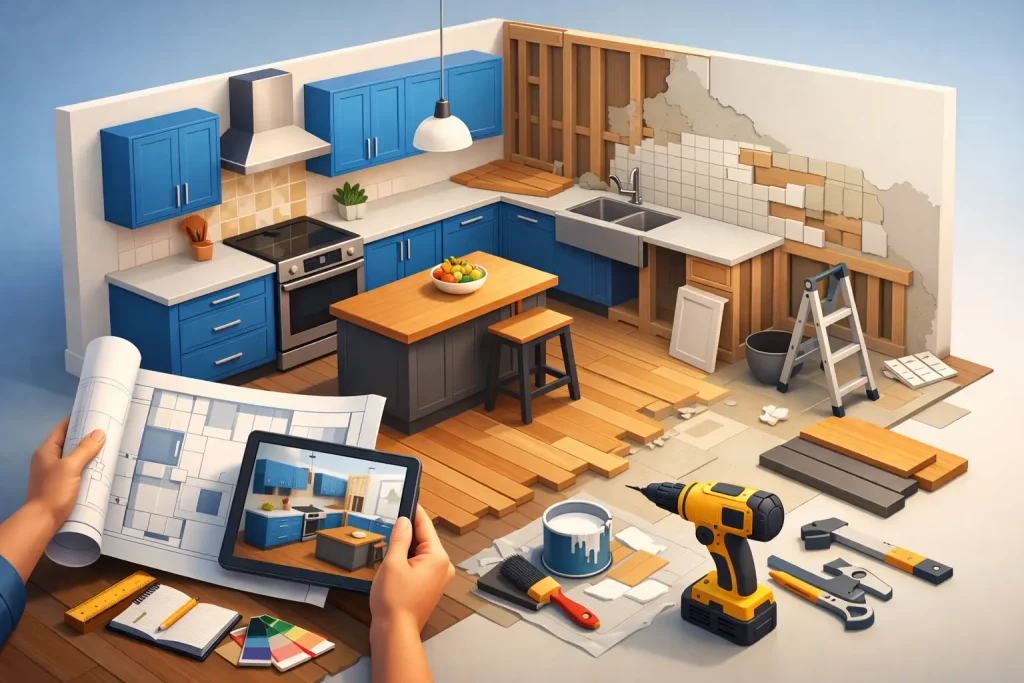
Most kitchen problems do not start with ugly cabinets. They start with a layout that fights you every morning, storage that makes no sense, and finishes that have simply reached the end of their life. If you are searching for how to remodel kitchen DIY, the real question is not whether you can do some of the work yourself. It is how far you should go before a smart DIY project turns into an expensive correction.
That line matters in kitchens more than almost any other room. A bad paint job in a bedroom is annoying. A bad kitchen remodel can affect plumbing, electrical, flooring, appliances, ventilation, and resale value all at once. So if you want to tackle your kitchen yourself, the best approach is not blind confidence. It is a clear plan, an honest budget, and knowing which jobs reward DIY effort and which ones usually cost more when they are redone later.
How to Remodel Kitchen DIY Without Regretting It
Start with the scope, not the sledgehammer. A lot of homeowners begin by tearing out cabinets before they have finalized appliance sizes, flooring thickness, countertop material, or even where the trash pullout should go. That is how projects stall out for weeks.
A better move is to define what kind of remodel you are actually doing. Some kitchens need a cosmetic refresh. That means painting cabinets, swapping hardware, replacing lighting, updating backsplash tile, and installing new countertops or flooring without changing the layout. Other kitchens need a functional remodel, where you move appliances, shift plumbing, open walls, or rework storage. DIY is much more realistic on the first type than the second.
If your current layout basically works, keep it. That one decision can save thousands. Leaving the sink, dishwasher, and range in place usually avoids major plumbing and electrical changes. It also helps your timeline stay under control.
Set a Budget That Matches the Real Job
Most DIY kitchen budgets go off track for one simple reason. Homeowners price the visible finishes and forget the boring stuff. Then demo starts, and suddenly there is subfloor repair, wall patching, disposal fees, missing shutoff valves, and one cabinet run that needs filler pieces and trim.
Build your budget in layers. First, account for the core materials: cabinets or cabinet paint supplies, hardware, countertops, backsplash, sink, faucet, flooring, and lighting. Then add tools you may need to buy or rent. After that, add jobsite costs like drop cloths, dust barriers, waste removal, and patch materials. Finally, hold back a contingency fund. In a kitchen, that cushion should be meaningful, because once walls and floors open up, surprises are common.
This is where homeowners in older homes need to be especially careful. Uneven floors, out-of-square walls, hidden water damage, and outdated wiring can turn a clean DIY plan into a much bigger project fast.
Plan the Layout Before You Touch Anything
Good kitchens are built on workflow. You should be able to move between the refrigerator, sink, and cooking area without feeling boxed in. Doors and drawers should open without collisions. There should be enough landing space near major appliances. And storage should match how your household actually cooks.
That means planning around real use, not showroom photos. A family that cooks every night needs better prep space and durable finishes. An apartment owner updating for resale may care more about broad appeal and smart spending. A narrow galley kitchen might benefit more from better lighting and full-height cabinetry than from trying to force in an island that makes the room harder to use.
Measure everything twice, then measure again after you choose appliances. Appliance dimensions, vent hood requirements, and door swing clearances can affect the entire plan. Even a small mistake here can create costly adjustments later.
What You Can Usually DIY
There is plenty a capable homeowner can handle well. Demolition is one of the most common, as long as you know what is behind the walls and shut off utilities where needed. Painting walls and cabinets can also be good DIY work if you take prep seriously. The same goes for hardware installation, trim touch-ups, shelving, backsplash tile in a simple layout, and some flooring products.
Cabinet painting, in particular, looks easy until you rush it. The difference between a clean, durable finish and a streaky mess usually comes down to degreasing, sanding, priming, drying time, and patience. If you skip steps, the kitchen will show it.
Backsplash tile is another area where DIY can pay off, but only if the wall is flat and the pattern is forgiving. Straight subway tile is much more manageable than a complicated mosaic with lots of cuts around outlets.
What Usually Should Not Be DIY
Any work involving gas lines, major electrical changes, plumbing relocations, or structural framing deserves real caution. The same goes for countertop templating and installation, especially with stone. Precision matters, and the cost of one mistake can wipe out whatever you hoped to save.
Cabinet installation sits in the middle. Some experienced DIY homeowners can do it well. But kitchens do not forgive bad cabinet work. If the boxes are not level and square, your countertops, fillers, doors, and crown details will all reflect that problem.
For many homeowners, the smartest version of DIY is a split-scope remodel. You handle the lighter work and hire skilled trades for the critical parts. That approach protects the finished product without giving up all cost savings.
Timeline Matters More Than Most People Think
A kitchen is not a spare room. When it is down, your whole routine changes. Meals get harder, mess spreads, and the stress level in the house goes up quickly. That is why scheduling matters almost as much as craftsmanship.
Before demo day, order everything with enough lead time. Not just cabinets and appliances, but also trim pieces, under-cabinet lighting, sink accessories, and any specialty hardware. Delays often happen because one small missing item prevents the next phase from starting.
Set up a temporary kitchen somewhere else in the house. A microwave, coffee maker, folding table, and a few basic dishes can make the process much easier. It is not glamorous, but it helps your household stay functional while work is underway.
If you are doing the remodel nights and weekends, be honest about how long that really gives you. A project that might take a crew a few weeks can stretch much longer for a homeowner balancing work and family.
Finish Choices Can Make or Break the Result
A kitchen does not need the most expensive materials to look sharp. It needs materials that work together and hold up. That is a big difference.
For cabinets, the color trend of the moment should not outweigh durability and maintenance. Painted cabinets can look great, but they tend to show wear faster than some wood finishes. Matte black fixtures look strong in photos, but they may show water spots and fingerprints more than brushed finishes. Marble is beautiful, but if you want low maintenance in a busy family kitchen, quartz may be the better fit.
Flooring deserves careful thought too. Kitchens deal with water, dropped utensils, chair movement, and constant traffic. Whatever you choose should be able to handle real life, not just look good the first month.
The Clean Job Is Usually the Better Job
One thing homeowners underestimate is how much quality comes from jobsite discipline. Protecting adjacent floors, controlling dust, labeling parts, and keeping tools organized does more than make the house look better during the project. It prevents damage, mistakes, and wasted time.
That is one reason experienced remodelers work methodically. The cleaner the process, the better the finish tends to be. Sloppy demo leads to extra repairs. Rushed prep leads to poor paint adhesion. Loose measurements lead to trim gaps and crooked lines.
For a local company like Clean Sweep Contracting, that standard matters because homeowners are not just buying materials. They are buying peace of mind that the work will be done right and the house will be respected while it happens.
When DIY Stops Making Sense
If your kitchen remodel involves changing walls, rerouting utilities, correcting old workmanship, or coordinating multiple trades, DIY can start costing more than it saves. That does not mean you failed. It means you recognized the point where experience matters.
The smartest homeowners are not the ones who insist on doing every task themselves. They are the ones who know where their time and skill create value and where a professional will protect the investment better.
A good kitchen remodel should feel solid every time you open a drawer, wash dishes, or walk across the floor. If you take on your project with a real plan, a realistic budget, and respect for the parts that require precision, DIY can absolutely improve your kitchen. Just make sure your pride is in the finished result, not in doing more than the job calls for.