


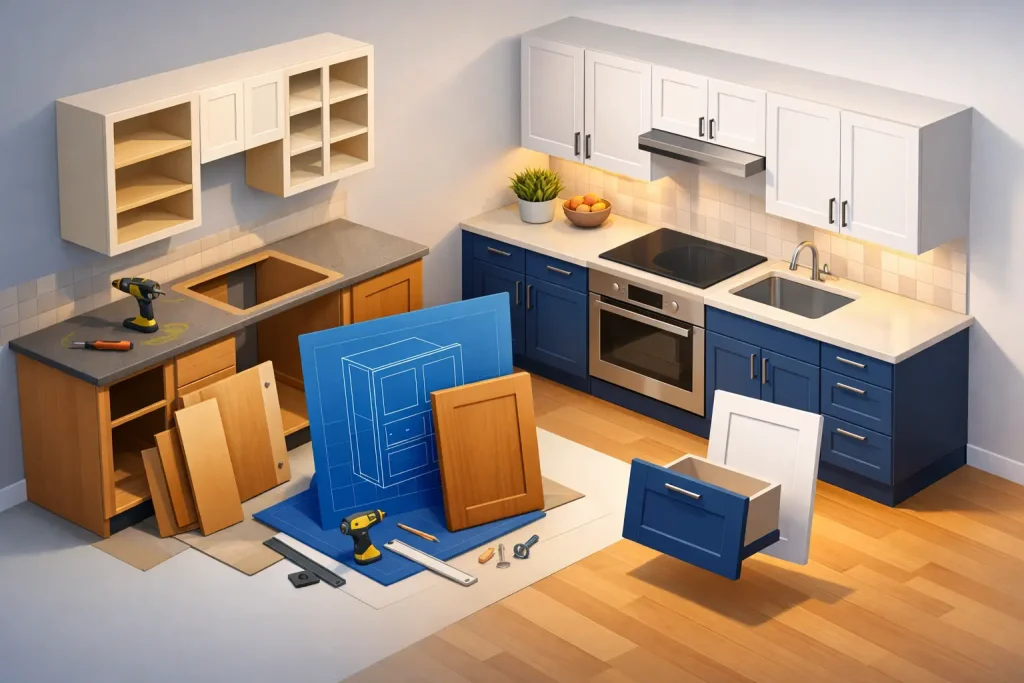
If your kitchen cabinets are swollen, peeling, crooked, or just stuck in another decade, paint alone will not save the room. A solid kitchen cabinet replacement guide helps you figure out whether you need a cosmetic update or a full reset, and that decision affects everything from layout and budget to how long your kitchen stays out of service.
Cabinet replacement is one of the biggest turning points in a kitchen remodel because it changes both the look and the function of the space. Done right, it gives you better storage, better flow, and a cleaner finish throughout the room. Done poorly, it leaves you with doors that never line up, fillers in awkward places, and expensive regrets hiding behind fresh paint and new hardware.
When cabinet replacement makes sense
Not every kitchen needs a full tear-out. If the cabinet boxes are structurally sound and the layout already works, refacing or repainting may be enough. But when boxes are damaged, water has gotten into the material, shelves are sagging, or the kitchen simply does not function for how your family lives, replacement is usually the smarter investment.
Layout is another big factor. If you want to add deeper drawers, move appliances, extend cabinets to the ceiling, or create an island, patchwork fixes usually start costing more than they are worth. Replacement gives you a clean slate. That matters in older homes where previous work may be out of square, layered over, or built around outdated dimensions.
Start with function, not door style
Most homeowners begin by looking at colors and shaker profiles. That is understandable, but the better place to start is how the kitchen needs to work day to day. Think about where pots live, where pantry overflow ends up, how many people move through the space at once, and whether your current storage forces clutter onto the counters.
A good cabinet plan solves problems before it picks finishes. Maybe that means wider drawer bases instead of too many lower doors. Maybe it means a pull-out trash cabinet near prep space, tray storage by the oven, or taller uppers that make use of dead wall space. The style still matters, but if the kitchen does not function better after the remodel, the job missed the point.
Kitchen cabinet replacement guide for budgeting
Budget is where expectations need to get real. Cabinets are not just boxes and doors. The final cost usually includes demolition, disposal, wall repair, possible flooring transitions, trim work, installation, hardware, and in many kitchens, electrical or plumbing adjustments. If countertops are being replaced too, cabinet measurements and install quality become even more critical.
Stock cabinets cost less up front, but they work best when your kitchen dimensions cooperate. Semi-custom gives you more flexibility with sizes, accessories, and finish choices. Custom cabinetry gives you the most control, especially in older homes with odd corners and uneven conditions, but it comes at a higher price point.
There is no universal right answer. A rental property, a starter home, and a long-term family home should not all get the same cabinet package. The key is matching the product to the house and to your plans for it over the next several years.
Choosing the right cabinet construction
This is where homeowners can save money wisely or waste it fast. Cabinet quality is not just about what the door looks like in a showroom. You want to know what the box is made from, how the drawers are built, what kind of hinges and slides are used, and whether the finish can hold up to real kitchen wear.
Plywood cabinet boxes typically hold up better than particleboard in demanding environments, especially where moisture may be a concern. Solid wood doors are common and durable, while drawer construction should feel firm and stable, not stapled together as an afterthought. Soft-close hardware is now standard in many lines, and for most homeowners, it is worth having.
Finish matters too. A kitchen takes abuse. Grease, steam, kids, pets, and constant cleaning all wear on surfaces. A cabinet that looks good for six months but chips around the handles or yellows near the range is not a bargain.
Layout changes can raise the value of replacement
Sometimes replacing cabinets is really about fixing the kitchen around them. If your current layout wastes corner space, blocks traffic, or gives too much room to rarely used items and not enough to everyday storage, new cabinets create the opportunity to correct that.
That could mean removing a short peninsula that makes the room feel tight. It could mean adding pantry cabinetry where a shallow closet once sat. In some homes, opening the kitchen to nearby living space changes the cabinet plan completely, since you may need finished ends, a better island design, or built-ins that tie the whole first floor together.
This is why an experienced contractor matters. Cabinet replacement is often connected to trim, tile, flooring, lighting, and wall repair. The more moving parts there are, the more valuable it is to have one team looking at the kitchen as a complete project instead of a series of isolated tasks.
What to expect during cabinet replacement
A proper replacement starts with careful measuring and planning. That sounds basic, but small mistakes become big problems fast in kitchens. Appliance clearances, window trim, ceiling height, flooring thickness, and countertop overhang all need to be considered before the first cabinet is ordered.
Then comes demolition. Old cabinets come out, and that is often when hidden issues show themselves. You might find damaged drywall, old plumbing locations, uneven walls, or electrical lines that need updating. In older homes, surprises are part of the job, not the exception.
After prep work is handled, installation begins. Good installers do more than get cabinets on the wall. They level, shim, align, secure, scribe, and finish the details so the whole kitchen reads as one clean system. That precision matters most at crown, fillers, end panels, and appliance openings, where sloppy work is easy to spot.
Common mistakes homeowners should avoid
One mistake is buying cabinets before the full scope is clear. Homeowners sometimes order cabinetry based on rough dimensions, then later decide to change appliances, move plumbing, or replace the floor. That can throw off everything.
Another mistake is treating cabinets as a stand-alone purchase instead of part of a full remodel. Even if you are only replacing cabinets, the surrounding finishes still affect the result. Wall texture, backsplash lines, flooring height, and lighting placement all influence how polished the final kitchen feels.
The last major mistake is choosing based on price alone. Low-cost cabinets can make sense in certain situations, but poor install and weak materials rarely stay hidden. Doors shift. fillers look clumsy. Drawers wear out. Homeowners end up paying twice – once for the cheap job, and again for the correction.
How to know you are hiring the right team
Cabinet replacement looks simple from the outside. It is not. The right contractor should be able to talk clearly about layout, product options, finish details, scheduling, and what happens if the walls or floors are not perfect once demolition starts.
You also want a team that respects your home while the work is happening. Kitchen remodels are disruptive. Dust control, clean work habits, communication, and follow-through are not extras. They are part of professional service. For homeowners in Staten Island, that level of accountability matters because most people are remodeling the house they live in now, not an empty showroom.
A contractor with broad remodeling experience also brings value when cabinet replacement connects to other upgrades. If tile, trim, flooring, framing, or built-ins are part of the bigger plan, having one accountable crew usually means fewer gaps, fewer excuses, and a cleaner final product. That is a big part of how Clean Sweep Contracting approaches residential work.
Making choices you will still like in five years
Trends come and go faster than cabinets should. White kitchens still have staying power, wood tones are back in a strong way, and mixed finishes can look sharp, but the best cabinet choice is usually the one that fits your home and your routine without trying too hard.
Simple door styles tend to age better than highly decorative ones. Good storage upgrades usually matter more over time than bold color choices. And if resale is part of your thinking, quality workmanship will carry more weight than trend-chasing details.
A kitchen cabinet replacement guide should help you do more than pick new doors. It should help you make practical decisions that improve daily use, protect your budget, and leave you with a kitchen that feels finished the right way. If you approach the project with a clear plan and the right crew behind it, cabinet replacement stops being a gamble and starts becoming the upgrade your home has been waiting for.
The best time to replace kitchen cabinets is when you are ready to solve the real problems in the room, not just cover them up.