


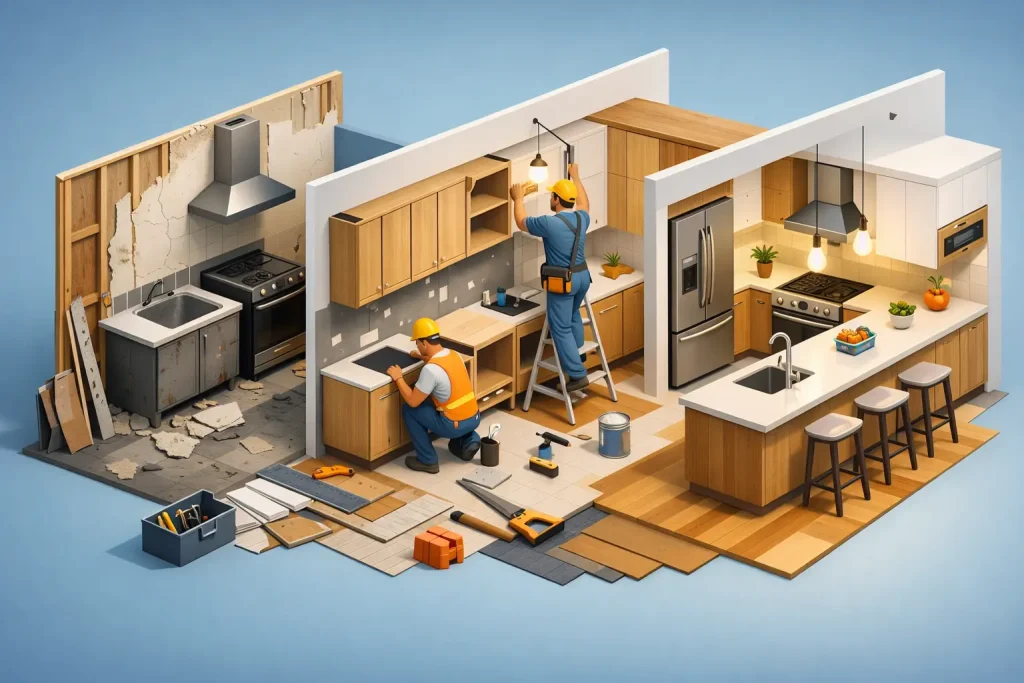
Most homeowners ask the same question right after they decide to renovate: how long is this actually going to take? A real kitchen remodel timeline example matters because the answer is rarely just “six weeks” or “two months.” The truth depends on design choices, permits, material lead times, and how much work is happening behind the walls.
If you’re planning a kitchen remodel, it helps to see the project the way a contractor sees it – in phases, with real dependencies. Cabinets cannot go in before rough plumbing and electrical are approved. Countertops cannot be templated until cabinets are installed. Finish work always looks fast at the end, but the early stages do the heavy lifting.
A realistic kitchen remodel timeline example
For a standard full kitchen remodel, a realistic range is often 8 to 12 weeks of active work after planning is complete. That does not include the design and ordering phase, which can add several weeks on the front end. If you are moving walls, upgrading service, waiting on custom cabinets, or dealing with older-home surprises, the timeline can stretch further.
Here is what a real-world example often looks like for a mid-range kitchen remodel where the layout changes slightly, new cabinets and counters are installed, and flooring, tile, lighting, plumbing fixtures, and paint are part of the scope.
Weeks 1-3: Planning, selections, and measuring
Before demolition starts, the scope has to be nailed down. This is where homeowners choose cabinet style, countertop material, appliances, tile, flooring, lighting, plumbing fixtures, and hardware. It sounds simple, but this phase can drag if too many decisions are left open.
A good contractor pushes this phase forward because every missing choice can create a delay later. If the refrigerator size changes after cabinet plans are set, or if a backsplash tile is backordered, the domino effect is real. This is also when field measurements, budget alignment, and schedule mapping happen.
Weeks 2-5: Ordering materials and permits
Some materials arrive quickly. Others do not. Stock cabinets may be available in a reasonable window, while semi-custom or custom cabinetry can take much longer. Stone slabs, specialty fixtures, and certain appliances can also hold up the project if they are ordered late.
If permits are required, they should be handled early. In places like Staten Island and across older parts of New York and New Jersey, permit timing and inspections can affect the flow more than homeowners expect. Even when the work itself is moving well, you still have to wait for the next approved step.
Week 6: Demolition
Demolition is the part everyone notices, and it usually moves fast. Old cabinets come out, countertops are removed, flooring may be pulled, and walls or soffits may be opened up. In a simple kitchen, demo might take only a couple of days. In an older house, it may reveal uneven framing, outdated wiring, plumbing issues, or water damage.
This is where trade-offs start. If everything behind the walls is in good shape, the project stays on track. If not, you make decisions. Do you patch only what is required, or do you upgrade now while the walls are open? The cheaper choice upfront is not always the smarter one long term.
What happens after demo
Weeks 6-7: Framing, plumbing, and electrical rough-in
Once the room is open, structural adjustments happen first if the layout is changing. Then plumbing and electrical rough-ins are completed. This includes moving sink lines, adding outlets, wiring lighting, planning appliance connections, and preparing for code compliance.
This phase is not glamorous, but it is where a kitchen becomes functional. Homeowners often focus on cabinet color and backsplash pattern, but the quality of the rough work affects how well the kitchen performs for years. A clean finish starts with solid work behind the walls.
Week 7 or 8: Inspections
If permits are involved, rough inspections usually happen before walls are closed. This can be quick, or it can take time depending on scheduling. A strong timeline accounts for this instead of pretending inspections are automatic and instant.
This is one reason remodel schedules should always have some cushion. A contractor can control crew coordination and jobsite cleanliness. No contractor controls every external inspection window or supplier delay.
Weeks 8-9: Insulation, drywall, and prep
After rough work is approved, the walls are closed up. Drywall goes in, gets taped and finished, and surfaces are prepped for paint. Depending on the level of work, trim repairs and ceiling patching may happen here too.
Drywall work often looks slow to homeowners because there is dry time between coats. That is normal. Rushing this stage usually shows up later in visible seams, rough corners, or a finish that never looks quite right.
Weeks 9-10: Flooring and cabinets
The sequence here depends on the flooring material and the kitchen design. In some remodels, flooring goes in before cabinets. In others, cabinets are installed first and flooring is fitted around them. There is no one-size-fits-all rule. It depends on the material, expansion needs, appliance heights, and budget.
Cabinet installation is one of the biggest milestones because the room starts to look like a kitchen again. It is also precision work. In older homes, walls and floors are rarely perfectly straight, which means experienced installers spend time scribing, leveling, and adjusting. That extra care matters more than speed.
The final stretch of a kitchen remodel timeline example
Weeks 10-11: Countertop template and fabrication
Countertops are usually measured after base cabinets are fully installed and secured. Templating too early creates risk. Once the template is done, fabrication begins.
This is a built-in waiting period in many kitchen projects. Even if everything else is moving on schedule, the counters still need to be fabricated. That is why a realistic kitchen remodel timeline example should never pretend every trade works back-to-back without pause.
Weeks 11-12: Tile, fixtures, and finish work
Once counters are in, backsplashes can be installed. Sinks and faucets are connected. Appliances are set. Light fixtures, switches, hardware, trim, paint touch-ups, and final punch-list items are handled in this stage.
This is the part homeowners love because the kitchen finally feels finished. But the best results come when the earlier stages were handled with discipline. Clean tile lines, smooth cabinet reveals, tight trim work, and properly aligned hardware are signs of a crew that paid attention the whole way through.
Final days: Punch list and walkthrough
Every solid remodel should end with a walkthrough. Doors get adjusted, touch-up paint is handled, caulking is checked, and small details are corrected. A kitchen is not done just because the last appliance is installed. It is done when the room is clean, working properly, and ready for daily life.
That last part matters. Homeowners are not paying for a jobsite that looks good in photos. They are paying for a finished kitchen that holds up under real use.
What can make the timeline shorter or longer?
A minor kitchen update with no layout changes can move much faster than the example above. If you are keeping plumbing and electrical in place, using stock materials, and avoiding structural work, the schedule may tighten up considerably.
On the other hand, a larger remodel can stretch well beyond 12 weeks. Moving gas lines, removing walls, waiting on custom millwork, upgrading old electrical panels, or correcting hidden damage all add time. Older homes especially tend to reveal conditions that were not obvious on day one.
Homeowner decision speed also plays a bigger role than most people realize. If key selections are made late, approved slowly, or changed midstream, the schedule feels unstable even when the crew is ready. The smoothest jobs are usually the ones where planning is handled seriously before demo begins.
How to keep your kitchen remodel on track
The best way to protect the timeline is to lock in decisions early, order materials ahead of demolition, and work with one accountable contractor who manages the job from start to finish. When multiple moving parts are being coordinated, gaps in communication turn into lost days fast.
It also helps to set expectations the right way. A kitchen remodel is not a paint job. Different trades have to come in at the right time, inspections may be required, and quality work takes actual scheduling discipline. If someone promises an aggressive timeline without asking detailed questions, that promise may not mean much.
At Clean Sweep Contracting, we know homeowners want straight answers, clean work, and a finished product that looks right and functions right. A real schedule should give you confidence, not false hope.
If you are planning your kitchen, think of the timeline as part of the investment, not just a countdown. The right job is not the one that moves fastest on paper. It is the one that is organized well enough to avoid costly mistakes and finished well enough that you are still happy with it years from now.