


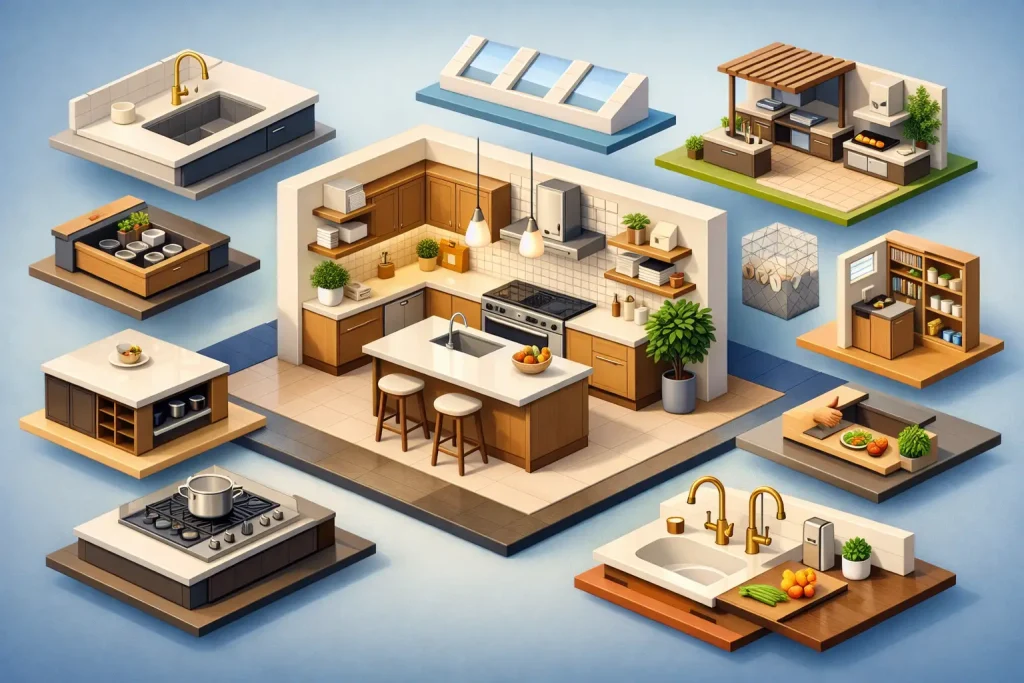
The difference between a kitchen that looks good in photos and one that works every single day usually comes down to planning. The best kitchen remodeling ideas are not just about new cabinets or a nicer backsplash. They solve real problems – bad layout, poor storage, weak lighting, worn surfaces, and a space that feels crowded when family and guests are all in it at once.
For most homeowners, a kitchen remodel is a major investment, so every choice needs to pull its weight. That means balancing looks with durability, resale value with daily use, and custom details with a budget that still makes sense. If you are thinking about remodeling your kitchen, these ideas can help you focus on upgrades that improve how the room lives, not just how it photographs.
Kitchen remodeling ideas that start with layout
A lot of kitchens do not need a bigger footprint. They need a smarter one. Before choosing finishes, it pays to look hard at how you move through the room. If the refrigerator door blocks the main path, if the dishwasher opens into a traffic lane, or if the range is squeezed into a corner, those issues will keep bothering you long after the paint dries.
One of the strongest remodeling moves is opening up pinch points. Sometimes that means removing a non-load-bearing wall. Sometimes it means shifting appliances a few feet so the room works better. In older homes, especially, layout changes can make the biggest difference because the original kitchen was not designed for how families cook and gather now.
An island can be a smart addition, but only when there is enough clearance around it. A cramped island makes a kitchen feel tighter, not better. If space is limited, a peninsula or a wider aisle with better base cabinet storage may give you more value than forcing in a centerpiece that gets in the way.
Storage that actually fixes clutter
A kitchen can have plenty of cabinets and still not have enough useful storage. That is because standard cabinets often waste deep corners, low shelves, and awkward vertical space. Good remodeling is not just adding more boxes. It is building storage around how you use the room.
Deep drawers for pots and pans are one of the most practical upgrades you can make. They are easier to access than lower cabinets, and they help keep heavy cookware organized. Pull-out pantry shelves, tray dividers, spice storage near the cooking area, and trash pull-outs can also make a kitchen feel more custom without turning every cabinet into a specialty item.
There is a trade-off here. Too many built-ins can drive up cost fast. The smart move is to choose a few high-impact storage upgrades where they matter most. Around the range, under the sink, and near the refrigerator are usually the best places to start.
Cabinet choices that change the whole room
Cabinets take up a lot of visual space, so they shape the overall feel more than almost anything else. White cabinets still work well because they keep the room bright and flexible, but they are not the only answer. Warm wood tones, soft grays, and muted greens can give a kitchen more character without making it feel trendy for the sake of it.
If your kitchen has low ceilings, running upper cabinets to the ceiling can make the room look taller while giving you more storage. If the space already feels heavy, mixing full cabinetry with open shelving or glass-front doors can break things up. It depends on the homeowner. Open shelving looks great when it is styled and kept tidy. In a busy family kitchen, closed storage is usually the better long-term choice.
Door style matters too. Shaker cabinets remain popular because they fit a wide range of homes, from traditional to transitional. Flat-panel doors can work beautifully in a more modern space, but they tend to show fingerprints and wear more clearly depending on the finish.
Countertops that hold up to real life
Countertops need to do more than match the cabinets. They need to survive daily use. Quartz remains one of the most requested materials because it is durable, low-maintenance, and available in a wide range of colors and patterns. For homeowners who want the look of natural stone without the upkeep, it is often the practical choice.
Natural stone still has plenty of appeal, especially if you want movement and variation that feels one of a kind. But some stones require more care, and not every household wants to think about sealing, etching, or stains. That is where honest planning matters. The right countertop is not always the fanciest one. It is the one that fits the way your kitchen is actually used.
Thickness, edge profile, and backsplash height all influence the final look. A simple countertop can feel high-end when the fabrication is clean and the installation is tight. That level of finish is what people notice, even if they cannot immediately say why the room feels polished.
Lighting is where many remodels fall short
A kitchen can have beautiful cabinets and still feel unfinished if the lighting is poor. This happens all the time. One ceiling fixture in the center of the room is not enough, especially when upper cabinets cast shadows over work areas.
Good kitchen lighting usually comes from layers. Recessed lights provide general light. Under-cabinet lighting helps with prep and makes the counters more usable. Pendants over an island or peninsula add style and focus. When these layers are planned together, the room feels cleaner, brighter, and more functional from morning through night.
Color temperature matters as much as fixture choice. Lighting that is too cool can make the kitchen feel harsh. Lighting that is too warm can distort colors. A balanced tone usually works best, especially in a room where you cook, clean, and gather.
Backsplashes that do more than fill a wall
A backsplash has a practical job, but it also gives the kitchen personality. Simple subway tile remains a strong choice because it is clean, timeless, and adaptable. That said, there is room to go further. A full-height backsplash in tile or slab material can make the whole kitchen feel more finished and custom.
Pattern is where restraint helps. A bold backsplash can be a strong focal point, but it works best when the rest of the kitchen is not competing with it. If the cabinets, counters, and flooring already have a lot going on, a quieter backsplash usually creates a better balance.
The quality of installation matters here just as much as the tile itself. Uneven spacing, sloppy cuts, and poor alignment can drag down the whole room. Detail work counts in a kitchen because everything is at eye level and gets seen every day.
Flooring that ties the space together
Kitchen floors take a beating. They need to handle spills, foot traffic, dropped utensils, pets, and constant cleaning. That makes material choice a big deal. Tile is durable and water-resistant, but some homeowners find it harder underfoot. Engineered wood can warm up the room and connect the kitchen to adjacent living areas, though moisture control becomes more important.
Large-format tile can make a smaller kitchen feel more open because there are fewer grout lines breaking up the surface. Wood-look tile remains popular for the same reason. It offers durability with a warmer appearance, which can be useful in homes where the kitchen opens into the main living space.
The key is continuity. A beautiful floor that fights with the cabinets or clashes with the rest of the house can make the remodel feel disconnected.
Small details that make the kitchen feel custom
Some of the best kitchen remodeling ideas are not the flashy ones. They are the details that make the room feel finished. Crown moulding, custom trim, panel-ready sides, built-in microwave placement, hidden outlets, and well-placed filler pieces all affect the final result.
Hardware is another example. Knobs and pulls are small, but they change the feel of the cabinets in a big way. The same goes for the faucet, sink configuration, and even the way the range hood is handled. These choices should fit the style of the kitchen, but they also need to hold up under real use.
This is often where homeowners feel the difference between a basic renovation and a carefully executed one. Clean lines, tight finishes, and a jobsite that stays organized during construction do not just make the process easier. They usually lead to a better outcome.
Kitchen remodeling ideas that add value without chasing trends
If resale matters, go for broad appeal, but do not strip all the personality out of the room. Buyers respond to kitchens that feel bright, functional, and well built. They also notice when a remodel looks rushed or overly trend-driven.
That is why the best value usually comes from strong fundamentals – efficient layout, durable surfaces, quality cabinets, good lighting, and workmanship that looks clean up close. Trend pieces can still have a place, but they should be easy to update later. Permanent elements should have staying power.
For homeowners in places like Staten Island, where homes often carry a mix of older layouts and long-term family use, that balance matters even more. A kitchen has to look good, but it also has to work hard.
A well-planned remodel is not about checking off design ideas from a gallery. It is about building a kitchen that fits your home, your routine, and your standards. If you focus on function first and finish with care, the results tend to last a lot longer than whatever happens to be popular this year.