


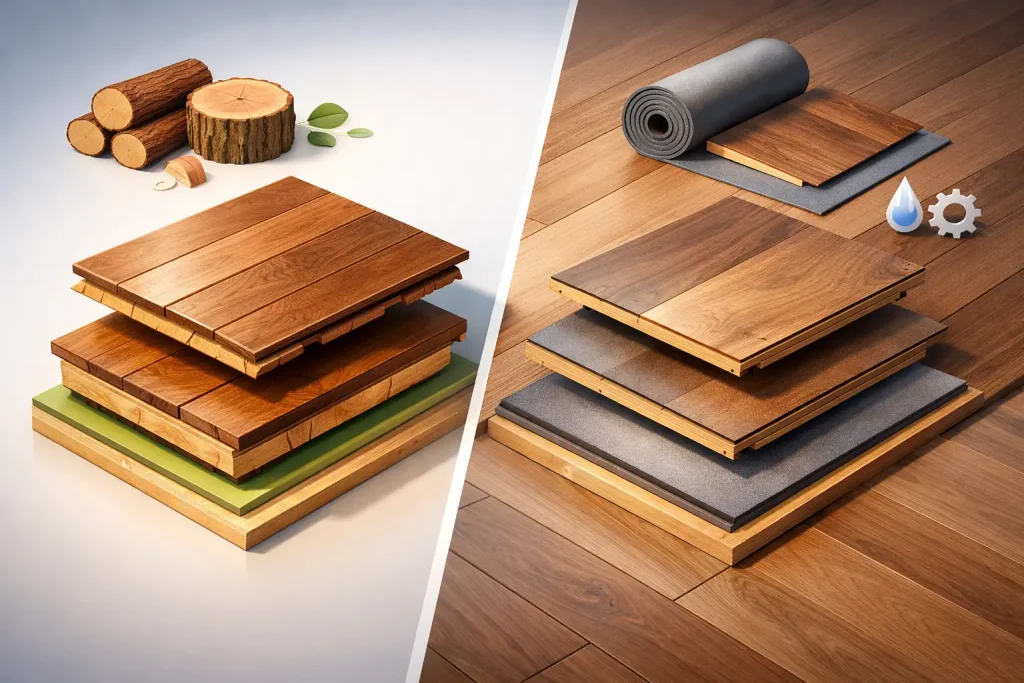
A new floor can change the entire feel of a home, but it also has to stand up to real life: wet boots at the entry, pets racing through the hall, chairs scraping under the kitchen table, and daily cleanup. When comparing solid wood versus laminate flooring, the right choice is rarely about which material is “better” overall. It is about what works best for your room, your budget, and how you use your home.
For many homeowners, solid wood is the long-term, high-character investment. Laminate is the practical, budget-conscious option that can deliver a convincing wood look with strong resistance to everyday wear. Knowing where each one performs well can prevent an expensive decision from becoming a frustrating one.
Solid Wood Versus Laminate Flooring: The Core Difference
Solid hardwood flooring is made from a single piece of real wood. Oak, maple, hickory, walnut, and other species are milled into planks that can be stained, sanded, and refinished over their lifespan. Every board has natural grain variation, knots, and color movement, which is part of why real wood has a look that manufactured products cannot fully duplicate.
Laminate flooring is a layered product. Its top surface is a high-resolution image of wood protected by a durable wear layer, typically over a fiberboard core. Better laminate products can look remarkably realistic from across a room, especially when they have textured surfaces and varied plank patterns. Up close, however, laminate does not have the depth, feel, or repair options of real hardwood.
That construction difference drives nearly every other comparison: price, maintenance, repairability, moisture tolerance, and resale appeal.
Where Solid Wood Flooring Earns Its Price
Solid wood flooring is a strong fit for living rooms, dining rooms, bedrooms, hallways, and other dry areas where homeowners want a permanent, high-end finish. It brings warmth underfoot and a level of visual character that works in both traditional Staten Island homes and more modern renovations.
Its biggest advantage is longevity. A quality hardwood floor can be sanded and refinished multiple times, depending on plank thickness and prior work. Surface scratches, worn finish, and dated stain colors do not necessarily mean replacement. A professional can restore the floor or give it a different look years down the road.
Wood also tends to carry more weight with buyers. It is a recognizable feature in real estate listings because people understand it is a genuine, lasting material. If you are renovating a long-term family home or making improvements before selling, hardwood can be a smart investment when it fits the budget.
There are trade-offs. Solid wood costs more for both material and installation, particularly if the existing subfloor needs leveling, repair, or preparation. It can scratch and dent, especially softer species or darker finishes. It also responds to changes in humidity, which means proper acclimation, installation methods, and indoor climate control matter.
Hardwood is not the best choice for every space. Full bathrooms are generally a poor match because standing water and repeated moisture exposure can cause cupping, gaps, or damage to the finish. Basements can also be complicated due to concrete slabs and below-grade moisture conditions.
The reality of hardwood maintenance
Hardwood is durable, but it is not carefree. Felt pads under furniture, rugs at entrances, prompt cleanup of spills, and regular sweeping go a long way. Avoid soaking the floor with water or using harsh cleaners that leave residue.
Some homeowners worry that scratches make hardwood look ruined. In many cases, light marks become part of a floor’s lived-in character. More significant wear can be addressed during refinishing, which is one reason wood remains a favorite for homes expected to evolve over decades.
When Laminate Flooring Makes More Sense
Laminate flooring is often the better answer when you want a clean wood appearance, need a tighter price point, or expect heavy day-to-day activity. Many modern laminate products are highly scratch-resistant and can be an excellent option for households with active kids, dogs, or rental-property traffic.
Installation is usually faster and less expensive than traditional nail-down hardwood. Most laminate floors use a floating click-lock system, which can reduce labor time when the subfloor is in good condition. That makes laminate useful for refreshing bedrooms, hallways, living areas, and certain finished basement spaces without taking on the full cost of hardwood.
Laminate can also provide more visual consistency. If you prefer a uniform color and grain pattern, it delivers that controlled look more easily than natural wood, where no two boards are identical.
Still, “water-resistant” does not mean waterproof. Some laminate products handle occasional spills well, but water that reaches seams or sits on the floor can swell the core. Kitchens, laundry areas, and entryways require careful product selection and attention to manufacturer specifications. For bathrooms or locations with frequent moisture, tile or another truly waterproof flooring may be the better move.
The main limitation: repair and replacement
Laminate cannot be sanded and refinished. Once the wear layer is deeply scratched, chipped, or damaged by moisture, the affected planks usually need to be replaced. That is manageable if you have extra material from the original installation, but it can become difficult if the product is discontinued.
Furniture legs, dropped tools, and sharp impacts can also chip laminate edges. Its wear surface is tough, but when damage breaks through it, there is no refinishing process to bring it back.
Compare Cost Beyond the Initial Estimate
The material price is only one piece of the flooring budget. A proper estimate should account for removing old floors, subfloor repairs, moisture testing where needed, trim removal and reinstallation, transitions between rooms, stairs, and disposal. These details are where a flooring project either looks finished or looks rushed.
Laminate generally has the lower upfront cost. It can offer a major visual improvement without consuming the same portion of the renovation budget as hardwood. That may be the right call if you are renovating several rooms at once, preparing an investment property, or prioritizing funds for a kitchen or bathroom project.
Solid wood usually costs more upfront, but it can last far longer when maintained properly. A floor that can be refinished instead of replaced may offer better value over the life of the home. The decision comes down to your timeline. If you plan to stay for many years and want authentic material, wood often makes sense. If you need durable style at a more controlled price, laminate can be the smarter purchase.
Match the Floor to the Room, Not Just the Look
A flooring sample can look great in a showroom and still be wrong for the room. Think about sunlight, moisture, pets, traffic, and the flooring around it.
For a formal dining room, living room, or primary bedroom, solid hardwood gives the room a permanent, custom feel. In a high-traffic family room, either material can work, but a tough laminate may reduce stress over everyday scratches. In a basement, evaluate moisture before choosing anything. A moisture-prone slab can create problems for both solid wood and standard laminate, even if the finish looks good on installation day.
Color matters as well. Very dark floors show dust, pet hair, and scratches more easily. Extremely light or gray-toned floors can show dirt in another way and may feel dated sooner than a natural mid-tone. Wider planks can make a room feel more open, but they require a flatter subfloor to install properly.
The condition beneath the flooring matters just as much as the product on top. An uneven subfloor can cause movement, gaps, clicking sounds, and premature wear. Before any installation begins, the floor should be inspected, prepared, and corrected as needed. Good craftsmanship is often invisible when the job is done right, but homeowners notice immediately when preparation was skipped.
How to Make the Right Flooring Decision
Choose solid wood when authentic material, long-term refinishing options, and resale appeal are priorities. It is especially worthwhile in main living spaces where the floor is meant to be a lasting part of the home’s character.
Choose laminate when you need a durable, attractive wood look at a lower initial cost, particularly in busy rooms where scratches and daily wear are expected. Select a quality product, save extra planks, and do not assume it is suitable for wet areas without checking its actual moisture rating.
The best flooring decision starts with an honest look at the room and the way your household lives in it. A qualified contractor can help assess the subfloor, transitions, moisture risks, and finish details before materials are ordered. Clean Sweep Contracting approaches flooring work with that same attention to preparation and detail, because a floor should look sharp on day one and keep serving your home well after the renovation dust is gone.