


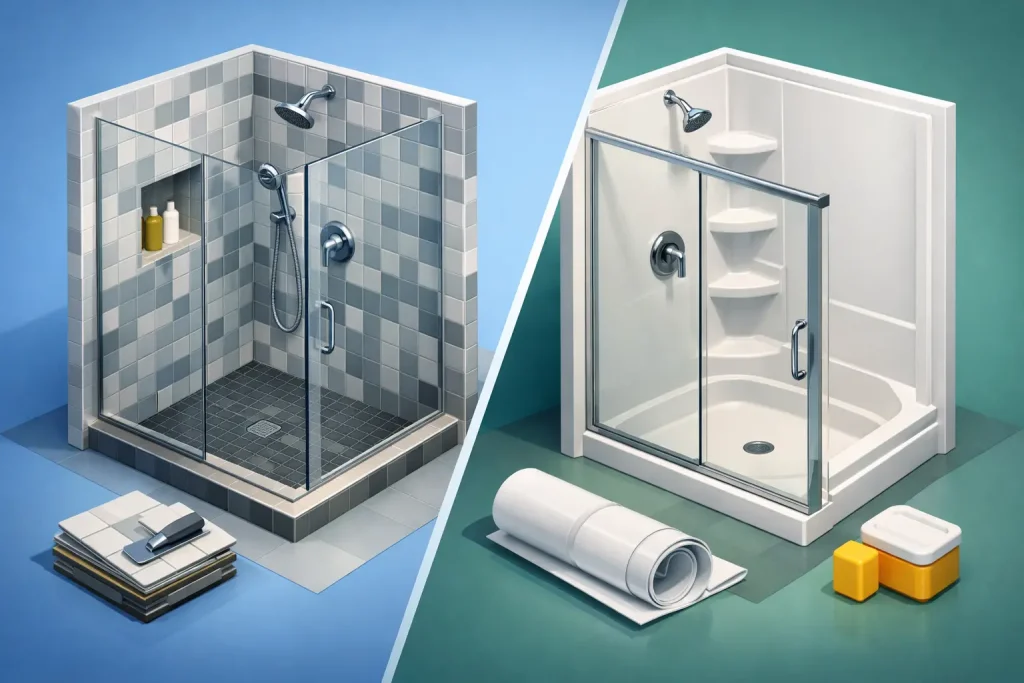
A shower can look great on the day a bathroom remodel wraps up. The real test comes years later, when it has handled rushed mornings, kids, guests, cleaning products, and constant moisture. When homeowners compare a tile shower vs fiberglass shower, the right answer is not always the most expensive option. It comes down to the condition of the bathroom, how long you plan to stay in the home, your budget, and the kind of finish you expect every day.
For many Staten Island homeowners, the choice is part of a larger bathroom renovation. That matters because a shower is not a standalone purchase. Proper waterproofing, plumbing access, ventilation, wall condition, and installation quality will have more impact on long-term performance than a showroom sample ever can.
Tile Shower vs Fiberglass Shower: The Main Difference
A fiberglass shower is typically a molded unit or a multi-piece surround installed over prepared walls. It is made for speed, straightforward cleaning, and a lower upfront investment. You will often see it in practical bathroom updates, rental properties, secondary baths, and projects where keeping construction time under control is a priority.
A tile shower is built in place. The contractor prepares the framing, installs a waterproofing system, forms the shower base or sets a compatible pan, then installs tile, grout, trim, and fixtures. That process takes longer, but it gives the homeowner far more control over the size, layout, materials, storage niches, benches, and finished appearance.
Neither option is automatically “better.” A well-installed fiberglass unit can be dependable for many years. A poorly built tile shower can become an expensive problem. The deciding factor is matching the system to the home and having the work completed correctly from behind the walls to the final caulk line.
Upfront Cost and What You Are Actually Paying For
Fiberglass usually wins on initial cost. The material is less expensive than most tile assemblies, and installation is faster because the unit arrives largely finished. A basic replacement can be a sensible choice when the layout stays the same and the surrounding bathroom does not need major work.
Tile costs more because there are more moving parts. In addition to the visible tile, there is demolition, substrate preparation, waterproofing, shower pan work, tile setting, grout, trim pieces, and labor. If the project includes moving plumbing, enlarging the shower, adding a glass enclosure, or correcting hidden water damage, the investment rises further.
Homeowners should be careful when comparing only a fiberglass quote against a tile quote. Ask what is included behind the finished surface. Is old damaged framing being repaired? Is the shower fully waterproofed? Are plumbing valves being updated? Is the floor level enough for proper drainage? A low number that skips necessary preparation is not a bargain.
Tile can make sense when you are building a primary bathroom you plan to enjoy for years, especially if the rest of the room is receiving custom work. Fiberglass can make sense when you need a clean, functional shower without turning a practical update into a major custom build.
Design Flexibility and Finished Appearance
This is where tile has a clear advantage. Tile can be used to create a walk-in shower, a compact corner shower, a tub surround, or a custom layout that works around an awkward wall or window. You can choose large-format porcelain for a clean modern look, classic subway tile, natural stone, patterned accents, or a simple design that fits an older home.
Tile also allows details that make a bathroom work better. A recessed niche keeps bottles off the shower floor. A corner bench can be useful for families and aging-in-place planning. A curbless or low-threshold entry may improve accessibility, provided the bathroom structure and drainage can support it.
Fiberglass offers fewer choices, but that does not mean it has to look cheap. Today’s units come in clean white finishes, neutral tones, and styles that work well in many bathrooms. The limitation is that the size, shape, and appearance are mostly set by the manufacturer. If you need an unusual footprint or want the shower to feel like a custom part of the room, fiberglass may feel restrictive.
For investment properties or guest baths, that simplicity can be a strength. For a primary bath where appearance matters every day, tile often delivers a more finished, permanent feel.
Cleaning and Day-to-Day Maintenance
Fiberglass is generally easier to clean because it has fewer seams. A smooth surface can be wiped down with a nonabrasive cleaner, and there are no grout joints to scrub. It is a solid option for homeowners who want low-maintenance materials and do not want to spend weekends cleaning shower walls.
The trade-off is that fiberglass can scratch, dull, or stain over time if harsh cleaners or abrasive pads are used. It can also flex if it was not properly supported during installation. Once a molded surface is deeply damaged, repairs may be visible or limited.
Tile needs more attention, especially at grout lines and caulk joints. Grout can collect soap residue and mildew if the bathroom has poor ventilation or the shower is not cleaned regularly. Modern grout products and properly selected sealers can reduce maintenance, but they do not eliminate it.
Porcelain or ceramic tile is usually a practical choice for busy bathrooms because it is durable and easier to maintain than many natural stone options. Natural stone can be beautiful, but it requires a homeowner who understands its care needs. The best material is the one you will realistically maintain, not just the one that looks best under showroom lighting.
Durability Depends on Installation
A fiberglass shower can last a long time when it is installed on a level, fully supported base with properly sealed connections. It may be more prone to cracking or movement if the floor beneath it is uneven or the unit was rushed into place. For multi-piece surrounds, seams and joints deserve careful attention because they are common areas for water intrusion.
Tile is extremely durable at the surface, but the system behind it is what protects the home. Water does not care how expensive the tile is. If the shower pan is not built correctly, the waterproofing is incomplete, or corners and penetrations are mishandled, moisture can reach framing and subflooring. That can lead to mold, rot, loose tile, and major repair work.
This is why experienced installation matters. A quality tile shower is built as a waterproof assembly first and a finished tile surface second. The work should include proper slope toward the drain, carefully treated corners and seams, secure substrate preparation, and clean transitions around fixtures and glass.
Resale Value and the Right Project Scope
A custom tile shower can strengthen a remodeled bathroom’s appeal, particularly in a primary suite or a home where buyers expect upgraded finishes. It photographs well, feels tailored to the space, and can make the whole bathroom look more valuable. Still, homeowners should keep the project in proportion to the house and neighborhood.
Installing high-end tile in a small hall bath is not always the best place to stretch the budget. In some homes, a clean fiberglass shower or tub surround paired with a new vanity, flooring, lighting, and paint creates the right result without overspending.
If resale is a concern, prioritize workmanship and a cohesive room over trendy materials. A timeless tile choice with straight layout lines, good lighting, and quality fixtures will usually age better than a flashy design that feels dated in a few years.
When Fiberglass Is the Smarter Choice
Fiberglass is often the better fit when the project has a tight budget, a quick turnaround matters, or the bathroom is primarily functional rather than a major design feature. It can also be a sensible option for rental units and secondary bathrooms where easy cleaning and straightforward replacement are valuable.
It is also worth considering if the existing layout is simple and the homeowner does not need custom dimensions. A properly installed fiberglass unit can provide a clean, reliable shower without adding unnecessary complexity to the renovation.
When a Tile Shower Is Worth It
Choose tile when the room calls for a custom fit, long-term durability, and a higher-end finished look. It is especially worthwhile when you want to remove an old tub, build a larger walk-in shower, add storage niches, update plumbing, or coordinate the shower with custom flooring and vanity work.
A tile shower is an investment in both appearance and construction quality. It should not be treated as a fast cosmetic upgrade. When the framing, waterproofing, tile installation, and finishing details are handled with care, it can become the centerpiece of the bathroom for years.
The best choice is the one that fits the way your household uses the room and the level of renovation the space truly needs. Before selecting a surface, look at the whole picture: the condition behind the walls, the desired layout, the maintenance you can live with, and the quality of the installation team. A shower built with that kind of planning will serve your home better than any material choice made on price alone.