


A pipe bursts at 2 a.m., the basement starts taking on water, and by sunrise you are already asking the question that matters most: water mitigation vs water restoration – what is the difference, and which service do you actually need first?
For most homeowners, those terms sound interchangeable until water damage hits. They are not the same job. They are connected, and in a real project they often overlap, but they solve different problems. If you understand where one ends and the other begins, you are in a much better position to protect your home, your timeline, and your budget.
Water mitigation vs water restoration: the core difference
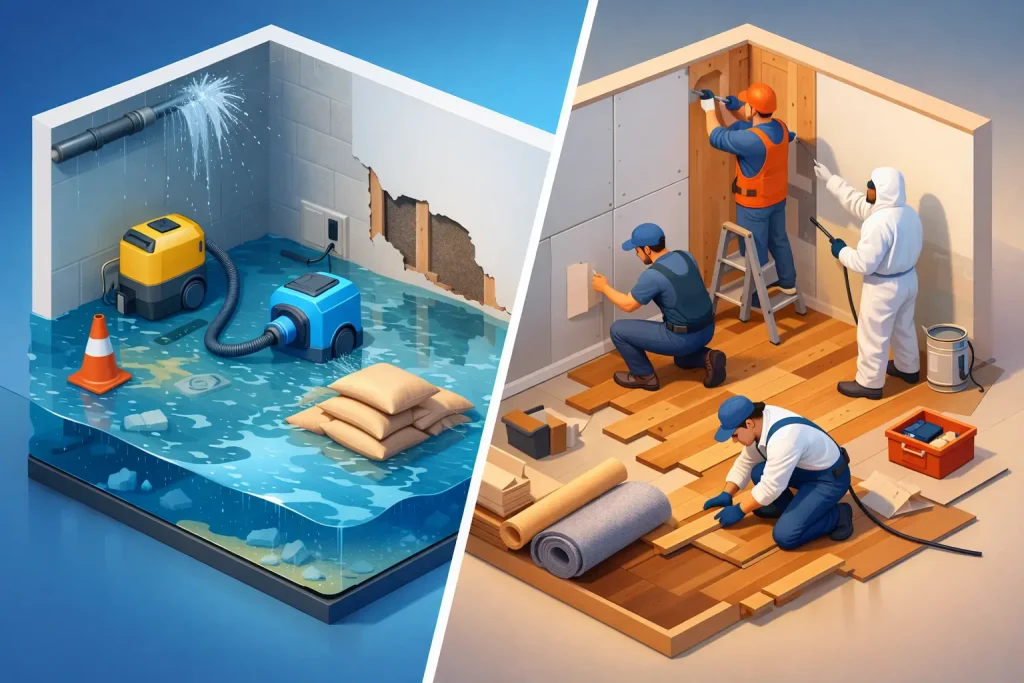
The simplest way to look at it is this: water mitigation is about stopping the damage from getting worse. Water restoration is about repairing the damage and bringing the property back to pre-loss condition.
Mitigation is the emergency response. It includes actions like shutting off the water source, extracting standing water, removing soaked materials when necessary, drying affected areas, and taking immediate steps to reduce mold risk and structural deterioration. The goal is control.
Restoration comes after that initial control phase, or sometimes alongside the end of it. This is the rebuilding side of the job. It can include replacing drywall, repairing flooring, painting, rebuilding trim, reinstalling cabinetry, and addressing the visible and hidden damage left behind. The goal is recovery.
That difference matters because some companies handle only the dry-out and cleanup, then leave the homeowner to find someone else for the actual repairs. For a lot of people, that is where the frustration starts. The emergency may be over, but the home is still torn apart.
Why mitigation has to happen first
Water is one of the fastest-moving forms of property damage. Drywall absorbs it. Wood swells. Flooring buckles. Insulation traps it. If water sits long enough, mold becomes a real concern, and then the job becomes more expensive and more disruptive.
That is why mitigation is not optional when there is active or recent water intrusion. You cannot responsibly restore a space that is still wet behind the walls or under the floor. Painting over stains, patching ceilings, or replacing finish materials too early can trap moisture and create bigger issues later.
This is where homeowners sometimes get bad advice. They see a stain on the ceiling or warped trim and assume the answer is just a repair. But if the area has not been properly dried and evaluated, the repair may only cover the symptom. The source and spread of the damage can still be there.
A good contractor knows that the first win is not cosmetic. It is stabilization.
What water mitigation usually includes
The exact scope depends on the source of the water, how long it has been there, and what materials were affected. A clean supply line leak is not the same as stormwater intrusion or a sewer backup. The category of water changes the handling, safety precautions, and disposal requirements.
In most residential situations, mitigation starts with finding and stopping the source if it is still active. Then comes water extraction, moisture checking, and strategic removal of materials that cannot be dried or safely saved. Depending on the space, that might mean sections of drywall, insulation, baseboards, laminate flooring, or damaged subfloor components.
Drying equipment often follows. Air movers and dehumidifiers are not there for show. They are there to pull moisture out of structural materials and reduce the chance of long-term damage. In some cases, antimicrobial treatment may also be part of the process, especially where conditions support microbial growth.
This stage can look messy to a homeowner because parts of the home may need to be opened up. But that controlled demolition is often what prevents a much larger repair later.
What water restoration usually includes
Once the property is dry, clean, and ready for rebuilding, restoration begins. This is the part homeowners tend to picture first because it is where the home starts looking like home again.
Restoration may involve hanging new drywall, taping and finishing, painting, replacing trim, repairing ceilings, reinstalling flooring, rebuilding damaged basement finishes, or restoring cabinetry and other interior elements. If the water event affected multiple parts of the house, the restoration scope can expand into broader renovation work.
This is also where craftsmanship matters. A rushed dry-out job is a problem, but a poor restoration job is just as frustrating. If the patchwork is obvious, the paint does not match, the trim lines are sloppy, or the floor transition looks off, the homeowner is left with a reminder of the damage every day.
That is why many people prefer working with a contractor who can handle both the emergency response side and the finish work side. It creates one line of accountability instead of a handoff between companies with different standards.
It is not always a clean line
In the real world, water mitigation vs water restoration is not always divided by a dramatic stop-and-start. Some steps overlap. For example, a contractor may remove damaged materials during mitigation, then begin planning the rebuild before drying is fully complete. Insurance documentation, material ordering, and repair decisions often happen in parallel.
The extent of the overlap depends on the severity of the damage. A small laundry room leak may move from extraction to repairs fairly quickly. A finished basement with widespread water exposure may require a more structured sequence and more demolition before restoration can even be priced accurately.
This is where honesty matters. If someone gives a full restoration promise before the moisture situation is understood, be cautious. Good contractors know that water damage jobs reveal themselves in stages.
How homeowners get confused – and why that costs money
A lot of confusion comes from language. Some companies use restoration as a catch-all term for everything. Others market mitigation and restoration separately. Homeowners hear both and understandably assume they are buying one package.
The problem is that assumptions lead to gaps. You may hire a company to dry the space out, only to learn later that they do not rebuild walls, replace flooring, or handle finish carpentry. Then you are suddenly managing a second phase with a different contractor, different schedule, and different expectations.
Another issue is timing. Some homeowners delay action because the damage does not seem severe. Maybe the floor feels only slightly damp, or the ceiling stain looks old rather than active. But hidden moisture is what turns a manageable repair into a larger project. The longer water sits inside building materials, the less likely those materials can be saved.
Fast action does not always mean panic. It means getting the right eyes on the problem before it spreads.
Which service do you need?
If the water event is active, recent, or still affecting materials, you need mitigation first. If the area is already dry, the source has been addressed, and the remaining issue is rebuilding damaged finishes, you are likely looking at restoration.
Many homeowners need both, whether they realize it at the start or not. A burst pipe behind a bathroom wall may begin as emergency mitigation and end with drywall repair, tile replacement, painting, and trim work. A basement flood may start with extraction and drying, then move into framing, insulation, flooring, and full finish replacement.
That is one reason full-service contractors can be a strong fit for these jobs. When one team understands both the damage control side and the rebuilding side, it is easier to make practical decisions about what can be saved, what should be removed, and how the finished result should come back together.
For homeowners in Staten Island, that matters more than it may seem on paper. Water damage rarely affects only one trade. It can touch framing, drywall, flooring, paint, trim, doors, and basement finishes all at once. A contractor who can handle that scope without losing the details can save you a lot of headaches.
What to ask before hiring anyone
Ask what part of the process they actually handle. Do they stop at drying, or do they also perform the repairs? Ask how they determine what materials can stay and what needs removal. Ask how they document moisture, how they approach hidden damage, and what the expected handoff looks like if another phase is involved.
You also want clarity on cleanliness and communication. Water jobs are stressful enough without a messy site or vague updates. Homeowners deserve to know what is happening, what is drying, what is being removed, and what comes next.
If the answers feel vague, keep looking. Water damage work moves fast, but that does not mean you should accept confusion.
The right move is usually the practical one: stop the damage first, dry the home properly, and then rebuild it with care. That is the difference between getting through a water event and truly putting it behind you.