


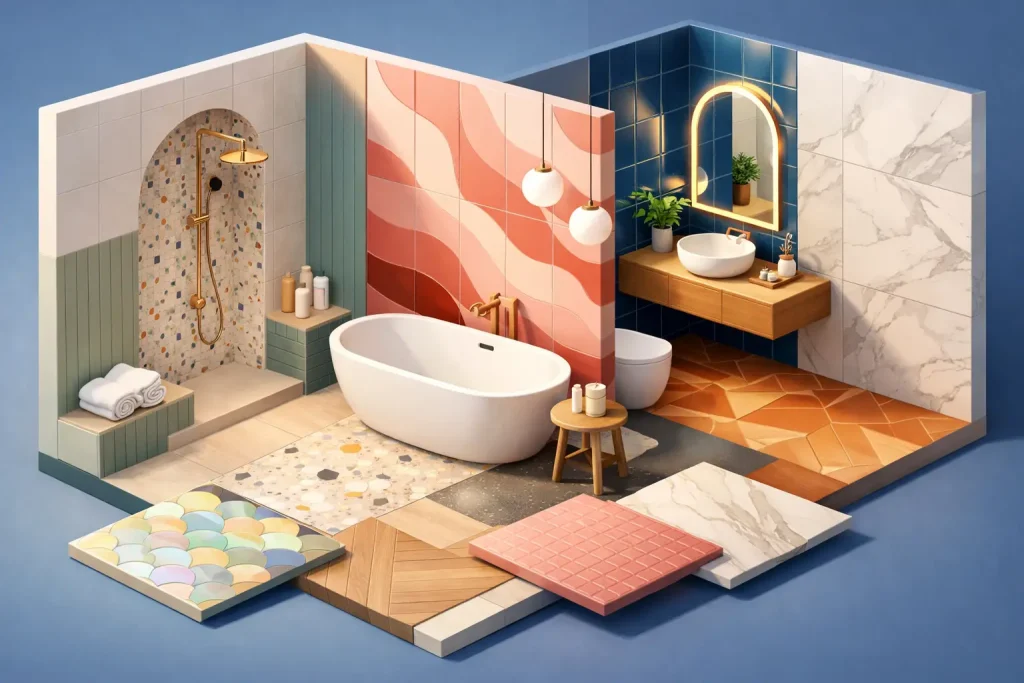
A bathroom can look dated fast when the tile choice is all about a passing color or a social media photo. The smarter bathroom tile trends 2026 homeowners should watch are less about chasing one look and more about choosing materials that bring warmth, personality, and everyday durability to the room. That matters when you are investing in a full remodel, not just changing a vanity or swapping out a mirror.
For Staten Island homes, the best tile plan also has to work with real life: wet floors, busy mornings, kids, guests, cleaning routines, and the existing character of the home. A beautiful tile installation should feel intentional on day one and still feel like the right decision years later.
Bathroom Tile Trends 2026 Start With Warmth
For years, cool gray tile dominated bathroom renovations. It was clean, safe, and easy to match. In 2026, the direction is noticeably warmer. Homeowners are leaning toward soft beige, mushroom, clay, sand, warm white, taupe, and muted olive tones that make a bathroom feel more settled and comfortable.
This does not mean every bathroom needs brown tile. The better approach is to use warmer undertones as a base, then add contrast through the vanity, hardware, lighting, or shower niche. A warm off-white porcelain wall tile with a walnut vanity, brushed nickel fixtures, and natural stone-look flooring can look current without feeling trendy for trend’s sake.
Warmer palettes are especially useful in bathrooms with limited natural light. Pure white and icy gray can feel harsh under overhead lighting. A creamier tile or soft matte finish reflects enough light while giving the room more depth.
Soft neutrals are not the same as plain
A neutral bathroom still needs variation. Look for tile with a gentle movement, handmade-style edges, subtle veining, or a finish that catches light differently across the surface. These details create a finished look without forcing the room into a loud color scheme that may be difficult to live with later.
Larger Formats, Fewer Grout Lines
Large-format porcelain remains one of the strongest practical choices for bathroom floors and shower walls. Tiles in 12-by-24, 24-by-24, and 24-by-48 sizes are showing up more often because they create a cleaner, more continuous surface. Fewer grout lines can mean less visual clutter and less grout to maintain.
That said, bigger is not automatically better. A large tile needs a properly prepared surface. Walls must be flat, floors need the correct slope, and the layout has to be planned before installation starts. Without that preparation, large tiles can show unevenness, leave awkward narrow cuts, or create lippage where one tile edge sits higher than the next.
For a compact hall bathroom, a medium-format tile can sometimes provide a better layout than an oversized slab-like look. The goal is proportion. A skilled contractor will measure the room, account for shower walls and niches, and place cuts where they are least noticeable instead of forcing a format that does not suit the space.
Matching floor and wall tile is becoming more common
Using the same porcelain collection on the floor and shower walls creates a calm, built-in appearance. You can vary the size or finish to keep it from looking flat. For example, a matte 24-by-24 floor tile may pair well with a larger polished or honed-look wall tile from the same collection.
This approach works particularly well in smaller bathrooms because it reduces competing lines and colors. In a larger primary bathroom, it can serve as the backdrop for a more distinctive shower wall or vanity area.
Stone Looks Get Bolder, But More Believable
Marble-look tile is still popular, but the trend is moving away from thin, faint gray veining on bright white backgrounds. Bathroom tile trends 2026 include stronger stone visuals: warm Calacatta styles, dramatic brown veining, green marble looks, travertine-inspired porcelain, and limestone textures.
Porcelain is often the practical choice for homeowners who want the character of natural stone without the same maintenance concerns. It holds up well in wet areas and does not require the level of sealing and careful product selection that many natural stones do. High-quality porcelain can also deliver a remarkably convincing stone appearance when installed with tight, consistent grout joints.
Natural stone still has a place, especially for a vanity backsplash, a powder room floor, or a carefully detailed feature wall. Its variation is hard to duplicate, and it brings real depth to a room. The trade-off is maintenance and material sensitivity. Marble, for example, can etch or stain if it is not properly cared for. The right choice depends on how the bathroom will be used and how much upkeep the homeowner wants to take on.
Statement Tile Moves to Focused Areas
Bold tile is not disappearing. It is becoming more deliberate. Rather than covering every wall in a strong pattern, homeowners are using statement materials where they will have the most impact: the back wall of a shower, a niche, a vanity backsplash, or the floor of a powder room.
Zellige-inspired ceramics, elongated subway tile, checkerboard layouts, fluted tile, and geometric mosaics are all being used to add personality. The key is restraint. If the shower wall has rich color or a busy pattern, keep the main floor and remaining walls quieter. If the floor is the feature, let the shower walls support it instead of competing with it.
A powder room is often the best place to take a bigger design risk. It is a smaller space, usually not exposed to the same daily shower moisture, and can handle a more dramatic wallpaper-and-tile combination. In a primary bathroom, most homeowners get better long-term value from a timeless base with a feature that can be appreciated without taking over the whole room.
Shape matters as much as color
Rectangles are no longer limited to the traditional horizontal subway tile layout. Vertical stacking can make a low ceiling feel taller. Long, narrow tiles laid in a running bond soften a modern bathroom. Square tiles with contrasting grout can bring back a classic, tailored look.
The layout should be decided alongside the tile selection. A simple tile installed in a thoughtful pattern often looks more custom than an expensive tile installed without a clear plan.
Texture Is In, But Safety Still Comes First
Matte and lightly textured surfaces are gaining ground over glossy finishes, particularly on floors. They create a softer, more natural appearance and often hide water spots better than high-shine tile. Texture can also provide better traction, which is a real consideration for shower floors and family bathrooms.
Not every textured tile belongs in every location. Deeply ridged or rough materials can collect soap residue and make cleaning harder. For a shower floor, small mosaics remain a reliable option because the additional grout joints add grip and help the installer create the necessary slope toward the drain.
For bathroom floors outside the shower, choose a tile rated for floor use with an appropriate slip-resistance level. Looks matter, but nobody wants a beautiful floor that feels unsafe when wet. This is one area where samples are useful. See the tile under your home’s lighting, touch the surface, and ask how it will perform in the intended location.
Grout Is Part of the Design, Not an Afterthought
Grout can either blend the tile field together or make every tile shape stand out. A color close to the tile creates a quieter, more expansive look. A contrasting grout emphasizes the pattern and can make a standard tile installation feel more graphic.
For most busy bathrooms, a mid-tone grout is the practical middle ground. Bright white grout can look sharp at first but may show discoloration more easily on a floor or shower. Very dark grout can highlight mineral residue and soap film in some settings. The right grout color should support the tile while fitting the cleaning expectations of the household.
It is also worth discussing grout joint size before work begins. Tight joints can look refined, but they require material that is sized consistently and a surface prepared to a high standard. Wider joints may suit handmade-look tile and allow its variation to read as intentional.
Choose a Tile Plan That Fits the Whole Remodel
Tile should not be selected in isolation. Before making a final choice, consider the vanity finish, countertop, plumbing fixtures, paint color, lighting temperature, shower glass, and the age of the home. Bring samples together in the room whenever possible. What looks warm under showroom lighting may read much cooler at home.
A professional bathroom remodel also needs to address the work behind the tile: waterproofing, substrate preparation, proper shower slope, waterproofed niches, transitions, and clean finish details around fixtures. The most expensive tile cannot make up for poor preparation. Solid craftsmanship is what protects the space from water damage and keeps the finished bathroom looking sharp.
At Clean Sweep Contracting, the focus is on helping homeowners make choices that look right, perform well, and fit the scope of the renovation from start to finish.
The best 2026 tile trend for your bathroom is the one that still makes sense after the samples, lighting, layout, and daily use are considered together. Choose the look you enjoy, then make sure the installation details are treated with the same level of care.