


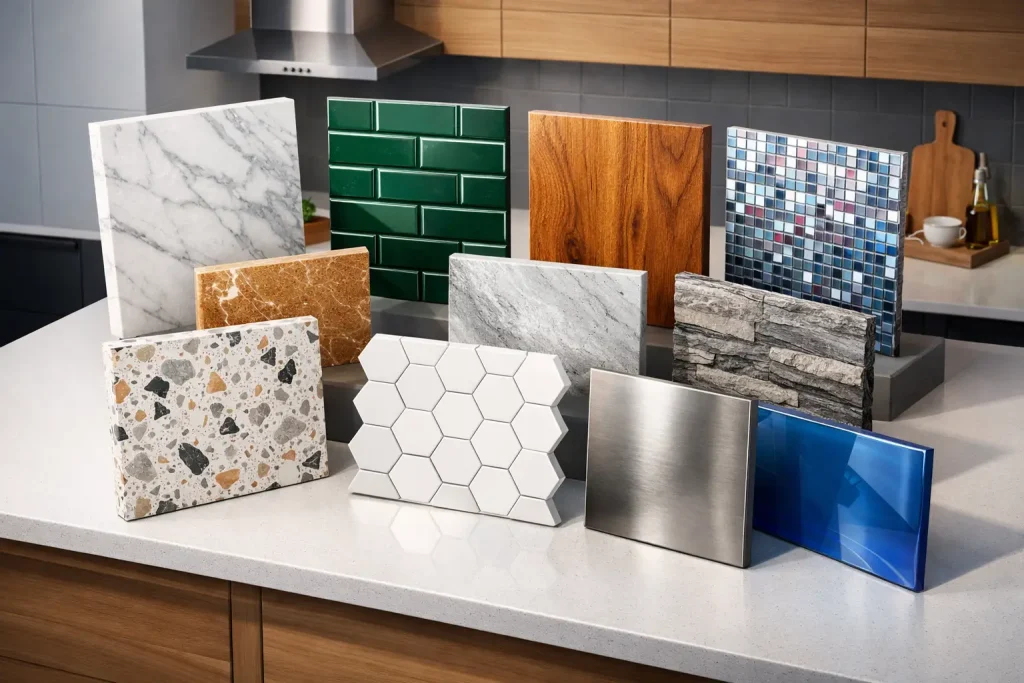
Picking a backsplash sounds simple until you realize it has to do three jobs at once. It needs to look right with your cabinets and counters, hold up to grease and moisture, and still be easy to clean on a busy weeknight. That is why homeowners spend so much time comparing the best kitchen backsplash materials before they commit.
The right choice depends on how you use your kitchen, how much maintenance you can live with, and how custom you want the finished space to feel. Some materials are budget-friendly and practical. Others bring a high-end look but need more care or a bigger installation budget. If you are remodeling once and want it done right, it pays to know the trade-offs before the tile goes on the wall.
What makes a backsplash material worth choosing
A good backsplash is not just about color or pattern. It has to perform. Behind the range, around the sink, and along prep areas, you are dealing with water, steam, food splatter, and constant wipe-downs. A material that looks great in a photo can become a headache fast if it stains easily, shows every smear, or has too many grout lines to keep clean.
For most homeowners, the real decision comes down to durability, maintenance, installation complexity, and how the material works with the rest of the kitchen. If you have quartz counters and shaker cabinets, one material may make the room feel clean and timeless. Another may make it feel too busy. That balance matters.
Best kitchen backsplash materials for most homes
Ceramic tile
Ceramic tile remains one of the most reliable choices because it covers the basics well. It is affordable, available in almost any color or size, and easy to clean once installed properly. For many kitchens, ceramic gives you enough design flexibility without pushing the budget too far.
It is especially useful if you want a classic subway tile look or a simple pattern that will not age badly in a few years. The main downside is that lower-end ceramic can chip, and grout maintenance is still part of the equation. If the layout is uneven or the corners are sloppy, the whole backsplash can look cheap even when the tile itself is solid.
Porcelain tile
Porcelain is often the better pick when you want tile with more strength and less porosity. It is denser than ceramic and handles moisture very well, which makes it a smart option around sinks and cooking areas. It also comes in styles that mimic stone, concrete, or even marble.
The catch is that porcelain can be tougher to cut and install, so workmanship matters. In a kitchen remodel, this is one of those materials where professional installation really shows. A clean layout, tight joints, and proper finishing around outlets make all the difference.
Glass tile
Glass tile can brighten a kitchen fast. It reflects light well, which helps smaller or darker kitchens feel more open. If your space needs a cleaner, more polished look, glass can do that in a way matte tile sometimes cannot.
But it is not perfect for every home. Glass tends to show smudges, and depending on the style, it can push the kitchen toward a more modern look than some homeowners want. Installation also needs a careful hand because thin-set lines and backing can show through if the work is not done correctly.
Natural stone
Stone backsplashes bring warmth and texture that manufactured materials often cannot fully match. Marble, travertine, slate, and other natural stones can make a kitchen feel custom and high-end. If you want character and variation, stone has plenty of it.
That same variation is also the challenge. Natural stone usually needs sealing, and some types stain or etch more easily than homeowners expect. Marble, for example, looks beautiful but is not the low-maintenance option some people assume. If you love the look and understand the upkeep, stone can be worth it. If you want easy cleaning with little thought, there may be better choices.
Quartz slab
A full slab backsplash has become a popular choice in higher-end kitchen remodels, especially when it matches the countertop material. Quartz slabs create a very clean, continuous look with almost no grout lines, which makes wipe-downs simple.
This option works well for homeowners who want a sleek finish and less maintenance than tile. It does cost more, and because the pieces are large and precise, fabrication and installation need to be exact. Still, if you want a backsplash that feels sharp, durable, and easy to live with, quartz deserves serious consideration.
Granite slab
Granite slabs offer many of the same benefits as quartz in terms of fewer seams and a strong visual impact. They are durable, heat-resistant, and often work well when homeowners want a natural material with movement and depth.
Granite does need sealing, and some patterns can be very busy once they continue up the wall. That is not always a bad thing, but it depends on the rest of the kitchen. If your cabinets, hardware, and flooring already have a lot going on, granite may compete more than it complements.
Stainless steel
Stainless steel is practical, tough, and easy to sanitize, which is why it is common in commercial kitchens. In a residential setting, it can look sharp behind a range or in a contemporary kitchen with simple lines.
Its weakness is warmth. Not every homeowner wants that professional, industrial feel in the heart of the home. Stainless also shows fingerprints and can scratch over time. For the right kitchen, it works. For a softer or more traditional design, it usually does not.
Beadboard or painted paneling
For kitchens that lean farmhouse, cottage, or traditional, beadboard can bring charm at a lower cost than many tile or slab options. It is also quicker to install in some cases and can look great in lower-splash areas away from heavy grease exposure.
The problem is durability. Painted surfaces are not as forgiving behind a cooktop or sink, and moisture can become an issue if the installation is not well sealed. This is more of a style choice than a heavy-duty performance choice.
Peel-and-stick products
Peel-and-stick backsplash materials appeal to people looking for a fast update, especially in rentals or temporary refresh projects. They are inexpensive, easy to install, and can improve the look of a dated kitchen without major work.
For a long-term remodel, though, they rarely compete with real tile or slab materials. Heat, moisture, and daily wear can expose their limits. If you are investing in a kitchen you plan to live with for years, this is usually not the finish that gives the best return.
How to choose the best kitchen backsplash materials for your layout
The best material is not always the most expensive one. It is the one that fits your kitchen and your habits.
If your priority is value and reliability, ceramic or porcelain tile is usually the safest move. If you want a cleaner, more upscale finish with less grout, quartz or granite slab may be the better investment. If design character matters most and you do not mind some upkeep, natural stone can deliver a strong result.
It also helps to think about where the backsplash is going. A full wall behind open shelving may call for a different look than a simple run between countertop and upper cabinets. Around a range, grease resistance and easy cleaning matter more. Around a prep sink, moisture resistance comes to the front.
In many homes, the smartest decision is not chasing trends. It is choosing a material that still looks right five or ten years from now and can handle everyday life without constant maintenance.
Why installation matters as much as the material
Even the best backsplash can disappoint if the installation is rushed. Uneven lines, bad cuts around outlets, lippage, messy grout joints, and poor edge details stand out every time you walk into the kitchen. This is one finish where precision is not a bonus. It is the job.
That is especially true when a backsplash has to tie into countertops, cabinets, trim, and wall conditions that are not perfectly square. An experienced installer knows how to lay out the material so the finished kitchen looks balanced, not patched together. That kind of detail work is where a remodel either feels polished or unfinished.
For homeowners in Staten Island and nearby areas, that matters because kitchens are often the most used room in the house and one of the biggest renovation investments. A backsplash may cover only part of the wall, but it has an outsized effect on the final look.
The right backsplash should work hard and look right
A backsplash is not just decoration. It is a working surface, a design feature, and one of the details that tells you whether a kitchen was built with care. If you keep that standard in mind, the decision gets clearer. Choose the material that fits your style, your maintenance comfort level, and the way your kitchen actually gets used – and make sure the installation gets the same level of attention.