


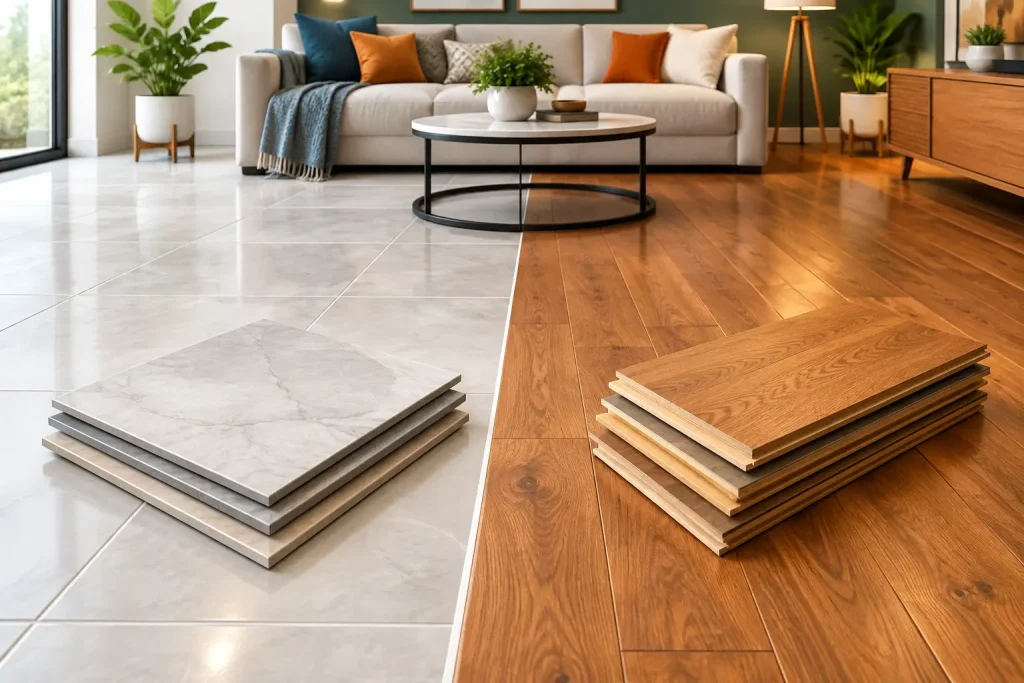
A kitchen floor can look great on the day it is installed and still become a headache when it meets wet boots, dropped pans, a leaking dishwasher, or years of family traffic. That is why tile flooring vs wood is more than a style decision. It is a choice about how each room works, how much maintenance you want to take on, and what kind of finish will hold up in your home.
For many Staten Island homeowners, the right answer is not one material throughout the house. Tile and wood each have a place. The best renovation plans use them where they perform best, then make sure transitions, subfloors, and installation details are handled correctly.
Tile Flooring vs Wood: The Everyday Differences
Tile and wood create very different living experiences. Tile is hard, water-resistant, and easy to wipe clean. Wood is warmer underfoot, quieter, and brings natural character that works in everything from a traditional colonial to a modern renovation.
The trade-off is straightforward. Tile can feel cold and unforgiving when you stand on it for long periods, especially in a kitchen. Wood feels more comfortable and has a little give, but it is more vulnerable to standing water, deep scratches, and humidity changes.
Neither material is automatically better. A busy family kitchen with a door to the yard has different demands than a formal dining room, a second-floor bedroom, or a basement renovation. The flooring needs to match the room, not just the photo you saved for inspiration.
Where tile earns its keep
Porcelain tile is a strong choice for bathrooms, mudrooms, entryways, laundry rooms, and kitchens where spills are common. It does not absorb water the way wood can, and quality tile stands up well to pets, shoes, cleaning, and daily use. It is also a practical option over radiant heat, which takes away much of the cold-floor concern.
For homes near the shore or properties dealing with wet weather, tile offers peace of mind at exterior entries and lower-level spaces. If water reaches the floor, tile itself is generally not the problem. The condition of the subfloor and the quality of the installation still matter, but the finish material is built for moisture.
Tile also gives homeowners a wide design range. Large-format porcelain can create a clean, continuous look. Wood-look tile offers the appearance of planks with better moisture resistance. Natural stone brings depth and variation, though it may require sealing and more thoughtful upkeep than porcelain.
Why wood remains a favorite
Real wood flooring has a warmth that tile cannot fully copy. It makes living rooms, bedrooms, hallways, and dining rooms feel finished without feeling overly formal. A well-selected hardwood floor can also tie multiple rooms together, making a smaller home feel more open and connected.
Solid hardwood can be sanded and refinished over its lifetime, which is a major advantage when the surface eventually shows wear. Engineered wood is often a smart option where height, stability, or installation conditions make solid wood less practical. The right product depends on the existing floor system and the room’s moisture exposure.
Wood does ask more from the homeowner. Wipe spills quickly, use pads beneath furniture, and avoid soaking the floor during cleaning. Sunlight can also change the color of natural wood over time. Many homeowners see that aging as character, but it should be expected rather than treated as a defect.
Choose Flooring by Room, Not by Trend
A flooring decision becomes easier when you begin with how a room is used. Bathrooms are usually tile territory because water is part of daily life there. A properly waterproofed tile floor is built to handle splashes, wet towels, and frequent cleaning in a way wood floors are not.
Kitchens require a more personal call. Tile makes sense for homeowners who prioritize durability, easy cleanup, and a surface that can handle active family life. Wood works well for those who want visual continuity into an open living area and are comfortable staying on top of spills. Engineered wood may be a reasonable middle ground in the right kitchen, but it is not a substitute for fixing moisture problems.
For living rooms, bedrooms, and upstairs hallways, wood often wins on comfort. It is warmer, quieter, and easier on the feet. Tile can work beautifully in these areas in a contemporary home or a house with radiant heat, but it should be a deliberate design choice rather than a default.
Basements deserve extra caution. Before choosing either material, address moisture, drainage, and slab conditions. Tile can be appropriate over a properly prepared concrete slab. Standard hardwood generally is not the first choice below grade, while certain engineered flooring products may work if the environment is dry and stable.
Installation Quality Changes the Outcome
A premium material cannot overcome poor preparation. Tile needs a flat, stable base, the right underlayment or uncoupling system, proper mortar coverage, and carefully planned grout joints. In wet areas, waterproofing behind and beneath the finished surface is just as important as the tile you can see.
Wood flooring also depends on what happens before the first plank is installed. The subfloor has to be sound and level enough for the product. Moisture levels must be checked, and wood should acclimate to the home when required. Skipping these steps can lead to gaps, cupping, movement, or squeaks that no homeowner wants after a remodel is complete.
Transitions deserve attention too. Tile and wood have different finished heights and move differently with temperature and humidity. A clean transition protects edges, avoids tripping hazards, and makes adjoining rooms feel intentional. This is the kind of detail that separates a rushed installation from finished craftsmanship.
Cost Is More Than the Price Per Square Foot
Material pricing matters, but it is only one part of the budget. Tile installation can require more labor because of floor preparation, layout, cuts, grout, waterproofing, and curing time. Large tiles and detailed patterns can add cost because they demand flatter surfaces and more precise work.
Wood costs vary widely by species, plank width, grade, finish, and whether you choose solid or engineered construction. Installation may be more direct in some rooms, but subfloor repairs, leveling, old-floor removal, stair work, and custom transitions can change the final number.
Long-term costs should be part of the conversation. Tile may need grout maintenance and occasional repair if something heavy chips it. Wood may eventually need refinishing, but a quality hardwood floor can be renewed rather than replaced. The lowest initial price is not always the best value if the material does not suit the space.
Maintenance and Repairs: Be Realistic About Daily Life
Tile is easy to maintain, but grout is not maintenance-free. Light-colored grout in a high-traffic entry or busy kitchen can show dirt over time. Choosing an appropriate grout color, using quality grout products, and cleaning routinely can make a major difference.
Wood needs gentler care, yet everyday maintenance is simple: sweep or vacuum regularly, use a manufacturer-approved cleaner, and keep water off the surface. Scratches can happen, especially with large dogs or furniture that gets moved often. Area rugs at doors and felt pads under chairs go a long way.
Repairs are different for each material. A damaged tile can sometimes be replaced if extra tiles were saved from the original installation. Hardwood can often be repaired or refinished, although matching a new board to an older floor may take skilled work. In both cases, ordering a little extra material during the project is a smart insurance policy.
Make the Choice That Supports the Whole Renovation
The strongest flooring plans consider cabinets, wall colors, trim, doors, lighting, and the rooms that connect to one another. A warm oak floor may be the right foundation for a living area, while durable porcelain handles the adjacent kitchen or entry. Done well, mixed materials do not look disconnected. They make practical sense and still feel like one home.
If you are weighing tile against wood as part of a larger remodel, bring the decision into the planning stage early. Clean Sweep Contracting helps homeowners look beyond samples and consider floor conditions, room use, transitions, and finish details before work begins. The best floor is the one that looks right on move-in day and still works hard for your family years later.