


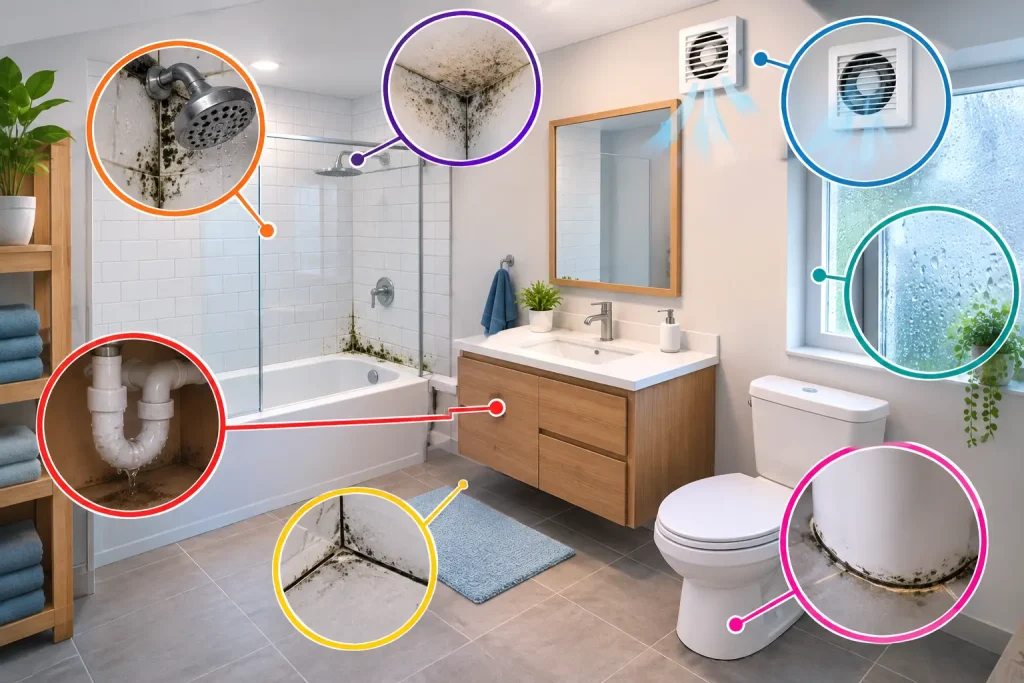
A bathroom can look clean on the surface and still be feeding mold behind the scenes. A dark line at the caulk, speckles on the ceiling, or a musty smell after a shower is not just a housekeeping issue. When homeowners ask what causes bathroom mold, the short answer is trapped moisture. The real answer is usually a combination of humidity, poor airflow, small water leaks, and materials that stay damp longer than they should.
Mold is common in bathrooms because the room works hard every day. Hot showers fill the air with steam. Wet towels hold moisture. Water gets around tubs, toilets, sinks, and shower doors. If that moisture cannot dry out quickly, mold has the conditions it needs to grow.
What Causes Bathroom Mold to Grow?
Mold spores are always present in normal indoor and outdoor air. They become a problem when they land on a damp surface with something organic to feed on, such as dust, soap residue, drywall paper, wood framing, or old caulk. Bathrooms also tend to stay warm, which speeds up the process.
A single wet shower wall is not necessarily a mold problem. The concern is repeated moisture that remains for hours or days. That is why two bathrooms in the same house can perform very differently. One may have a properly sized exhaust fan and well-sealed tile, while the other has a weak fan, cracked grout, and a slow plumbing leak hidden inside a vanity.
1. Weak or Missing Ventilation
The most common culprit is poor ventilation. An exhaust fan should pull humid air out of the bathroom and vent it outdoors, not into an attic, soffit, or another closed space. If steam still hangs in the room long after a shower, the fan may be undersized, clogged with dust, improperly ducted, or simply not being used long enough.
Opening a window can help, but it is not always enough, especially during humid New York summers or cold winter months when the window stays shut. A fan should run during the shower and continue afterward until the mirror and surfaces are dry. Some homeowners use a timer switch or humidity-sensing fan so the system does not rely on someone remembering to turn it off later.
2. Condensation on Cold Surfaces
Condensation is moisture from the air turning into water when it hits a cooler surface. You will often see it on windows, exterior walls, toilet tanks, pipes, and ceilings. In a bathroom, repeated condensation can create mold even when there is no obvious plumbing leak.
Poor insulation around an exterior wall or ceiling can make this worse. So can gaps around recessed lights, fan housings, and pipe penetrations that allow cold air into the room. If mold repeatedly appears in the same ceiling corner, especially in winter, condensation and insulation details deserve a closer look.
3. Leaks Behind Walls and Under Fixtures
A leak does not need to be dramatic to cause real damage. A loose shower valve connection, worn toilet wax ring, cracked drain fitting, dripping supply line, or failed tub overflow gasket can keep framing and drywall damp for months before anyone sees a stain.
Watch for soft flooring near the toilet, bubbling paint, a vanity cabinet that smells musty, loose tile, or discoloration on the ceiling below the bathroom. These signs can point to water traveling beyond the visible area. Surface cleaning will not solve mold if the material behind the wall is still wet.
This is where a proper inspection matters. A contractor may need to remove a small section of drywall, open a ceiling below, or use moisture-testing equipment to find the source. It is better to make a controlled repair early than wait for rot, damaged subflooring, or a larger mold cleanup.
4. Failed Caulk, Grout, and Shower Seals
Tile is water-resistant, but a tiled shower is not automatically waterproof. The grout joints, corners, fixture openings, shower door tracks, and changes of plane all need to be maintained. Caulk is flexible and is used where surfaces meet or move, such as where a tub meets tile. When it cracks, pulls away, or becomes heavily mildewed, water can get behind the finished surface.
Grout can also become porous over time. That does not always mean the shower is failing, but missing grout, cracked tiles, or recurring mold in the same joints should not be ignored. If cleaning improves the appearance for a week and the dark staining comes back quickly, moisture may be getting in from behind rather than sitting on the face of the tile.
Older bathrooms are especially likely to have installation issues hidden beneath the finish. A shower can look acceptable from the outside while its waterproofing layer has failed inside the wall. In that situation, re-caulking alone may only delay a larger repair.
5. Wet Towels, Bath Mats, and Everyday Clutter
Not every bathroom mold issue starts in the walls. Wet towels piled on the floor, bath mats that never fully dry, shower curtains bunched up after use, and crowded shelves around the tub all hold moisture close to surfaces. Dust and body-care residue add an easy food source.
Simple habits make a difference: hang towels so air can reach both sides, spread out the shower curtain after use, and wash bath mats regularly. Leave space around toilet bases, vanity plumbing, and shower corners so those areas can be cleaned and inspected. A bathroom that is packed with storage bins and laundry is harder to keep dry and harder to monitor for a small leak.
6. Poor Bathroom Design or Remodeling Details
A bathroom remodel should do more than improve the appearance of the room. The construction details determine how it handles water for years to come. Common trouble spots include an exhaust fan that is too small for the room, no proper vapor management on an exterior wall, inadequate slope toward a shower drain, poorly sealed niches, and tile installed without a dependable waterproofing system behind it.
Material choices matter, too. Drywall may be suitable in some areas of a bathroom, but it should not be used inside a shower enclosure. Water-resistant board is not the same thing as a fully waterproof shower system. Around tubs and showers, the wall assembly needs the right substrate, waterproofing membrane or system, sealed penetrations, and careful transitions at every edge.
There is a trade-off between a quick cosmetic update and a full repair. Replacing a stained ceiling and adding fresh caulk may be enough if the moisture source is clearly resolved. If there is soft drywall, active leaking, loose tile, or mold returning again and again, opening the affected area is usually the more responsible choice.
7. Cleaning That Removes Stains but Not the Cause
Bleach, mold sprays, and elbow grease can make visible mold look better. They do not fix humidity, a leaking pipe, or wet framing. On nonporous surfaces such as glazed tile or glass, careful cleaning can be effective when the moisture problem has been corrected. Porous materials like drywall, insulation, particleboard, and badly deteriorated caulk may need to be removed and replaced.
Avoid treating a significant mold issue as a weekend paint project. Painting over stains without correcting the water source often leads to peeling paint and more visible growth. If the affected area is large, if there is a strong odor, or if water damage is hidden behind walls, get a qualified professional involved to assess the condition and plan the repair safely.
How to Keep Mold From Returning
The best prevention is to make drying fast and predictable. Run the fan, repair leaks promptly, and wipe down the shower when heavy use leaves standing water. Keep humidity under control, particularly in bathrooms without windows. Check caulk and grout at least a few times a year, and look inside vanity cabinets for drips or swollen materials.
During a bathroom renovation, this is the time to correct problems that are difficult to reach later. Clean Sweep Contracting approaches bathroom work with the full system in mind: ventilation, waterproofing, tile, plumbing access, finish work, and the clean details homeowners see every day. A well-built bathroom should not force you to keep fighting the same stains at the ceiling or caulk line.
Mold is often your bathroom’s way of reporting that water is lingering where it does not belong. Address the moisture source early, and you protect more than the room’s appearance – you protect the walls, flooring, and investment behind it.