


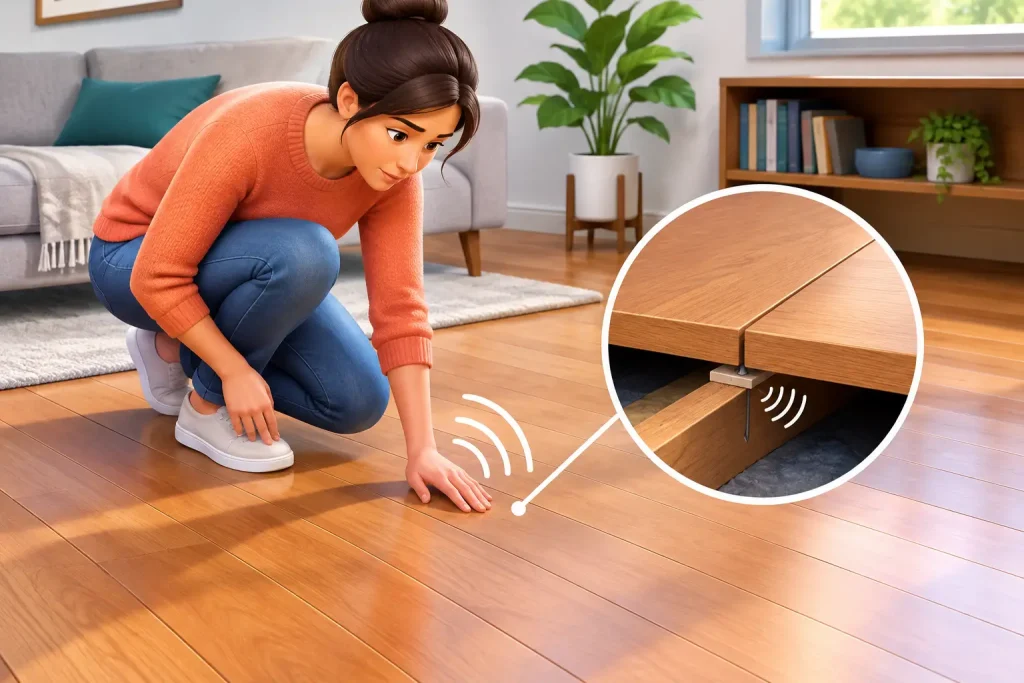
A squeak usually announces itself at the worst time: on the hallway path to a sleeping child’s room, beneath the kitchen table, or right where guests step through the front door. The good news is that why floors squeak is rarely a mystery. The harder part is identifying which layer of the floor assembly is moving and choosing a repair that lasts instead of covering up the noise for a few weeks.
In many Staten Island homes, floors have lived through years of seasonal humidity, heavy foot traffic, renovations, and settling. A squeak does not always mean there is structural damage. But it does mean two materials are rubbing, shifting, or flexing where they should be firmly supported.
Why Floors Squeak in the First Place
Most finished floors are built in layers. You may see hardwood, engineered wood, tile, vinyl, or carpet at the surface. Under that is a subfloor, usually plywood or oriented strand board. Below the subfloor are floor joists, which carry the load across the room. A squeak can come from any connection between those layers.
The most common cause is a loose subfloor. When the subfloor is not tightly fastened to the joists, it can move slightly under a person’s weight. The wood rubs against a nail, screw, joist, or nearby sheet of subflooring, creating that familiar chirp or creak.
Seasonal expansion can add to the problem. Wood naturally swells as humidity rises and shrinks when indoor air becomes dry. In an older house, small changes in board spacing, fasteners, and framing can become noticeable over time. That is why some homeowners hear more noise in winter while others notice it during damp summer weather.
Finished hardwood can squeak even when the framing below is solid. Boards may rub against one another, nails may have loosened, or the flooring may be installed too tightly around walls and transitions. Engineered flooring and laminate can also make noise when the underlayment is uneven, the subfloor has dips, or the floating floor does not have enough room to expand.
The Sound and Location Offer Useful Clues
Before assuming the whole floor needs to be replaced, pay attention to where and when the squeak occurs. A single noisy spot near the center of a room often points to subfloor movement over a joist. A wider area that feels soft, bouncy, or uneven may indicate a bigger issue with the subfloor, framing, or moisture exposure.
A squeak at the edge of a room can be caused by flooring pressed too tightly against a wall, baseboard, cabinet, or transition strip. Noise around a doorway may come from a floor-height change, loose underlayment, or movement where two materials meet.
The feel underfoot matters just as much as the noise. A firm floor that squeaks in one or two places is often a targeted repair. A floor that sinks, flexes noticeably, has cracked tile, or feels spongy deserves a closer inspection. Those signs can point to water damage, deteriorated subflooring, undersized framing, or an issue that was hidden by a previous renovation.
If the squeak appeared shortly after a dishwasher leak, bathroom overflow, or basement moisture problem, do not treat it as a normal aging issue. Water can weaken wood materials and loosen fasteners. The source of moisture must be corrected before the floor is repaired, or the same problem can return.
Finding the Source Without Making the Problem Worse
A proper diagnosis starts with a controlled walk-through. Have one person walk slowly across the floor while another listens from below, if there is access through a basement, crawlspace, or unfinished ceiling. The person below may be able to see movement between the joist and subfloor or identify a loose nail working up and down.
When there is no access from below, the job requires more care. Driving screws through a finished wood floor can leave visible damage if it is done in the wrong location. It can also miss the joist entirely, which means the squeak remains and the floor now has an unnecessary hole.
Carpeted floors create a different challenge. A repair can sometimes be made through the carpet using specialized breakaway screws, but the screw location still needs to be accurate. With hardwood, luxury vinyl, tile, or a floating floor, the right fix depends on the material, how it was installed, and whether it can be removed and reinstalled without damage.
This is where quick internet fixes can lead homeowners in the wrong direction. Powder or lubricant may reduce rubbing between exposed boards, but it will not fix a loose subfloor. Shims can be effective from below when installed properly, but forcing a thick shim into a gap can lift the floor and create a new problem. Construction adhesive can help in the right place, yet it should not be used to hide moisture damage or replace sound fastening.
Repairs That Actually Address a Squeaky Floor
When the subfloor has separated slightly from a joist, the most dependable repair is usually to secure the subfloor back to the framing. From below, that may involve screws installed at the correct angle and length, sometimes paired with construction adhesive where the materials are clean, dry, and stable. The goal is to eliminate movement without punching through the finished surface.
If there is movement between sheets of subfloor, blocking or additional support may be needed. This is more common when an older floor was built with thinner subflooring or when a past remodel changed loads, removed a wall, or added heavy finishes such as stone or tile.
For hardwood flooring, repairs can range from re-fastening individual boards to removing and reinstalling a section so the substrate can be corrected. The best choice depends on the floor’s condition and the value of the finish. A visible face screw may be acceptable in a utility area, but it is not the right answer for a formal living room with a carefully finished hardwood floor.
Floating floors need room to move, but they also need a flat, stable base. If the subfloor is uneven, the finished floor can flex at seams and make clicking or squeaking sounds. In that case, repairing the surface alone is a temporary move. The flooring may need to be lifted so the subfloor can be leveled, patched, or replaced.
Tile deserves special attention. A squeak under tile may be accompanied by cracking grout, loose tiles, or a hollow sound when tapped. Because tile is rigid, movement below it can cause visible damage over time. The repair may involve removing affected tile, rebuilding the underlayment, and installing the finish correctly rather than simply filling cracks in the grout.
When a Squeak Is More Than an Annoyance
Call for an experienced inspection when the noise comes with sagging, soft spots, repeated water exposure, persistent musty odors, or cracks spreading across walls or ceilings nearby. These conditions do not automatically mean major structural work, but they should not be ignored.
The same is true if the floor is part of a larger renovation plan. If you are replacing flooring, remodeling a kitchen, finishing a basement, or updating a bathroom, it makes sense to address movement in the subfloor and framing before new finishes go in. Quality flooring cannot compensate for a weak or uneven base.
Clean Sweep Contracting approaches this type of work from the full assembly, not just the surface. A lasting repair starts with identifying the source, protecting the finished areas that can be saved, and correcting the condition beneath the floor with clean, careful workmanship.
A quiet floor is not just a comfort upgrade. It is often proof that the layers beneath your feet are properly supported, securely fastened, and ready to carry the life happening above them.