



A small bathroom can feel finished and intentional, or tight and underlit, based largely on one decision: the wall color. Choosing the best paint colors for small bathrooms is not just about picking a light shade. It is about working with the room’s natural light, tile, vanity finish, ceiling height, and the way your family actually uses the space.
A well-chosen color will make the room feel cleaner, brighter, and more connected. A poor match can make white tile look yellow, a gray vanity look purple, or a room with no window feel even more closed in. The goal is not to make every small bathroom plain white. The goal is to use color with a plan.
Best Paint Colors for Small Bathrooms
1. Soft warm white
Warm white is a dependable choice for bathrooms with limited natural light. Unlike a stark, blue-based white, it has a slight cream, beige, or soft gray undertone that keeps the room from feeling cold. It pairs especially well with brass fixtures, natural wood vanities, travertine, and warmer marble patterns.
This is often the right call in older Staten Island homes where the bathroom may have one small window or no window at all. A warm white reflects light without turning the room into a harsh, clinical box. Be careful with overly creamy shades if the existing tile is bright white, though. The contrast can make older tile look dingy rather than intentional.
2. Clean neutral white
A clean neutral white works best when the bathroom already has crisp finishes: white subway tile, polished chrome, black hardware, and a white or light-gray vanity. It gives a compact powder room a sharp, updated look and lets the tilework, mirror, and fixtures do the visual work.
The trade-off is that neutral white needs good lighting. Under a weak yellow bulb, it can look gray or flat. Before committing, test the color with the same bulbs you plan to use in the finished bathroom. Color samples that look great in a sunny living room can look completely different under a bathroom vanity light.
3. Pale blue-gray
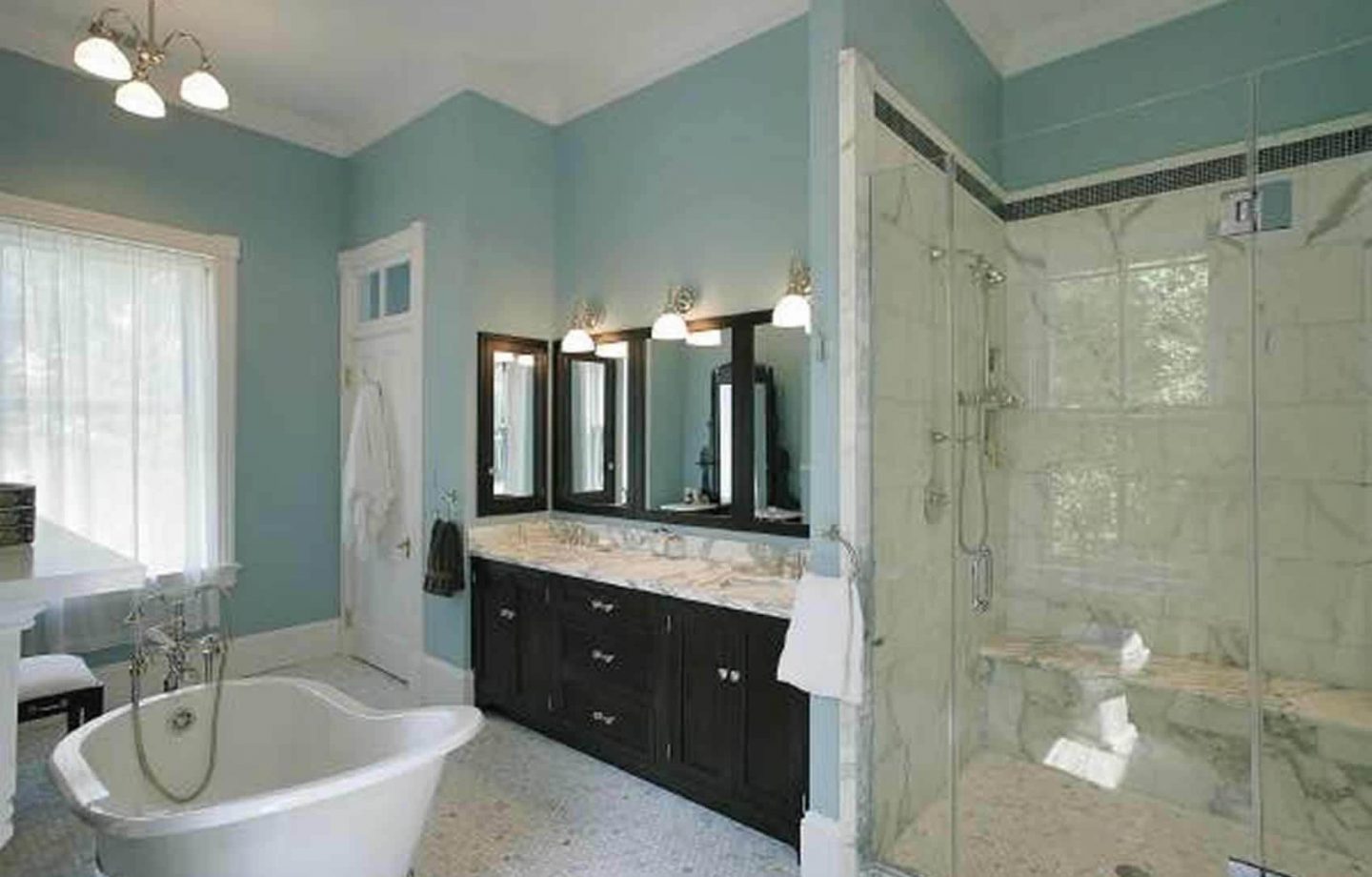
A light blue-gray brings calm without making the room feel dark. It is a strong option for bathrooms with white porcelain, gray stone, chrome fixtures, or cool-toned marble. The right blue-gray reads clean and quiet, not like a nursery or a beach-house theme.
Undertones matter here. Some blue-grays lean lavender in artificial light, while others pull green next to certain tiles. A painted sample board is more useful than a tiny swatch because it lets you move the color around the room and check it beside the floor, shower wall, and vanity.
4. Light sage green
Muted sage is one of the best ways to add personality to a small bathroom without overpowering it. It works with white tile, matte black fixtures, light oak, brushed nickel, and warm brass. The color gives the room a natural, settled feel while still keeping it light enough for a smaller footprint.
Choose a soft gray-green rather than a bright yellow-green. Strong green can reflect onto white countertops and make skin tones look off in the mirror. A pale sage with a dusty undertone is easier to live with and tends to stay current longer than a trend-driven shade.
5. Gentle greige
Greige sits between gray and beige, making it one of the most flexible choices for a bathroom renovation. It can tie together warm flooring, white fixtures, and gray-veined stone without forcing the room too far in either direction. For homeowners updating an existing bathroom in stages, that flexibility matters.
Avoid a greige that is too dark in a bathroom with low ceilings or limited lighting. A lighter version gives enough contrast to define the walls while keeping the room open. It also hides minor everyday marks better than pure white, which is helpful in busy family bathrooms.
6. Soft taupe
Soft taupe offers more warmth than greige and brings a comfortable, tailored look to a powder room or primary bath. It is particularly effective with warm white tile, cream countertops, wood-toned vanities, and brass accents. In a small room, taupe feels more polished than beige when the undertone is controlled.
The key is to stay light. Deep taupe can be handsome, but it needs deliberate lighting and contrast from a bright vanity, mirror, and trim. In a tight bathroom, a medium-to-light taupe creates depth without visually pushing the walls inward.
7. Blush beige or muted clay
For a homeowner who wants warmth without a traditional neutral, blush beige and very muted clay can be excellent choices. These shades work well with warm metals, oak, off-white tile, and patterned floors. They add color but still feel grounded enough for a permanent renovation.
This option depends heavily on the surrounding finishes. Pink-leaning paint next to cool gray tile can look disconnected. When the existing bathroom has a lot of blue-gray stone, choose a cooler neutral instead. When the room has warm tile or brass hardware, a restrained blush can make the space feel custom rather than generic.
8. Charcoal or deep navy for a powder room
Not every small bathroom has to be light. In a powder room, a deep charcoal, inky navy, or dark green can create a dramatic finished look. Because guests spend less time there and do not need bright task lighting for grooming, a darker color can feel intentional instead of cramped.
Use this approach when the room has a strong mirror, good lighting, and clean trim details. A dark wall color looks best when the prep work is sharp and the finish is even. Patchy walls, rough caulk lines, and poorly cut paint edges become far more noticeable against deep paint.
Choose Color Based on the Fixed Finishes First
Paint is easier and less expensive to change than tile, countertops, flooring, and a vanity. That is why the paint color should be chosen after the fixed finishes are selected, not before. Bring home samples and look at them next to the actual tile or countertop, not just a photo on your phone.
Start by identifying whether the existing materials are warm, cool, or mixed. Warm finishes usually have cream, tan, gold, or brown undertones. Cool finishes tend toward crisp white, blue, gray, or black. Mixed bathrooms can look great, but they need a bridge color such as soft greige, neutral white, or pale sage to make the materials feel coordinated.
If you are remodeling from the studs out, select the tile and vanity first, then narrow paint choices. This prevents the common problem of choosing a favorite wall color that fights with an expensive tile installation once everything is in place.
Paint Finish Matters as Much as Color
Bathroom walls deal with humidity, steam, splashes, and frequent cleaning. A quality satin finish is usually the best balance for most walls. It has a subtle sheen, holds up to wiping, and handles moisture better than flat paint. Eggshell can work in a well-ventilated bathroom, but it is less forgiving around sinks and shower areas.
Use a moisture-resistant bathroom paint and make sure the exhaust fan is doing its job. Paint alone cannot solve ventilation problems. If moisture regularly builds up on the walls and ceiling, fix the fan, ducting, or airflow issue before investing in a fresh paint job.
For ceilings, a flat moisture-resistant white is typically the cleanest choice. Painting the ceiling the same wall color can make a small bathroom feel more designed, especially with pale shades. With a dark powder room, matching the ceiling can create a cozy, wrapped-in look, but only if the lighting plan is strong.
Make the Room Feel Larger Without Chasing a Trick
Light colors reflect more light, but the best result comes from the whole room working together. Keep trim and doors in a coordinated white, use a mirror large enough for the vanity, and avoid placing several unrelated colors in one compact space. A continuous floor tile can also make the room feel less chopped up.
If you want a little contrast, put it in one controlled place: the vanity, an accent wall behind the mirror, or a patterned floor. Too many competing finishes make a small bathroom feel busy. A clean color plan lets quality tilework, carpentry, and fixtures look more expensive.
The best paint choice should still look right on an overcast morning, under nighttime lighting, and after a hot shower. Test a few real samples, live with them for a day or two, and choose the shade that supports the bathroom you are building, not just the one that looked good online.