



A bathroom quote can look straightforward until the walls open up, the tile choice changes, or the plumbing turns out older than expected. That is why learning how to budget bathroom renovation work the right way matters before you pick a vanity or fall in love with a stone tile you did not price out.
Most homeowners do not overspend because they are careless. They overspend because they budget for finishes and forget about labor, prep, waterproofing, permits, disposal, or the small decisions that add up fast. A solid bathroom budget is not about chasing the cheapest number. It is about knowing where the money goes, what is worth paying for, and where you can pull back without hurting the final result.
How to budget bathroom renovation without guessing
The first step is to decide what kind of renovation you are actually planning. A cosmetic refresh has a very different budget than a full gut renovation. If you are keeping the layout, leaving plumbing in place, and swapping out tile, vanity, lighting, and fixtures, your budget stays more controlled. Once you start moving a toilet, changing drain locations, replacing subfloor, or rebuilding walls, the numbers change quickly.
This is where many budgets go off track. Homeowners often compare their project to a friend’s bathroom remodel without realizing the scope is completely different. Two bathrooms can be the same size and still have very different costs based on access, age of the home, material selection, and hidden conditions behind the walls.
A practical way to start is to separate your budget into three buckets: construction, finish materials, and contingency. Construction covers demolition, plumbing, electrical, framing, waterproofing, tile installation, painting, trim, and cleanup. Finish materials include the visible items such as tile, vanity, mirror, toilet, faucet, light fixture, and hardware. Contingency is the money you set aside for surprises.
If you lump everything into one number, it gets hard to make good decisions. If you break it out, you can see where to upgrade and where to stay disciplined.
Start with your real spending limit
Before you build the design, decide the maximum amount you are comfortable spending, not just the amount you hope the job will cost. Those are two different numbers.
If your target budget is $20,000 but the absolute top of your comfort zone is $24,000, that gap matters. It gives you room to absorb necessary changes without turning the whole project into a financial headache. A bathroom renovation should improve your home, not leave you frustrated halfway through because every adjustment feels like a crisis.
For many homeowners, it helps to work backward. If you know your spending limit, reserve 10 to 20 percent for contingency right away. In older homes, especially, hidden issues are not rare. Water damage, uneven floors, outdated plumbing, or moisture behind tile can all show up once demolition starts. In a newer bathroom with a limited scope, 10 percent may be enough. In an older home or a full gut job, 15 to 20 percent is safer.
That means if your hard cap is $25,000, you should not design a $25,000 bathroom. You should probably design a $20,000 to $22,000 bathroom and leave the rest alone until you know you will not need it.
Know what drives the cost up
Size matters, but it is not the only thing that affects price. The biggest cost drivers are usually labor, layout changes, tile complexity, and product selection.
Labor is a major part of any bathroom renovation because bathrooms pack a lot of work into a small space. Demolition, prep, waterproofing, plumbing, electrical, tile setting, grouting, fixture installation, painting, and finish carpentry all happen in tight quarters. Good labor is not where you want to cut corners. A bathroom that looks nice on day one but leaks behind the wall six months later is not a bargain.
Layout changes are another budget breaker. Moving plumbing lines for a shower, tub, sink, or toilet takes more time, more coordination, and sometimes more repair work to floors and walls. If your existing layout works, keeping it can save a meaningful amount.
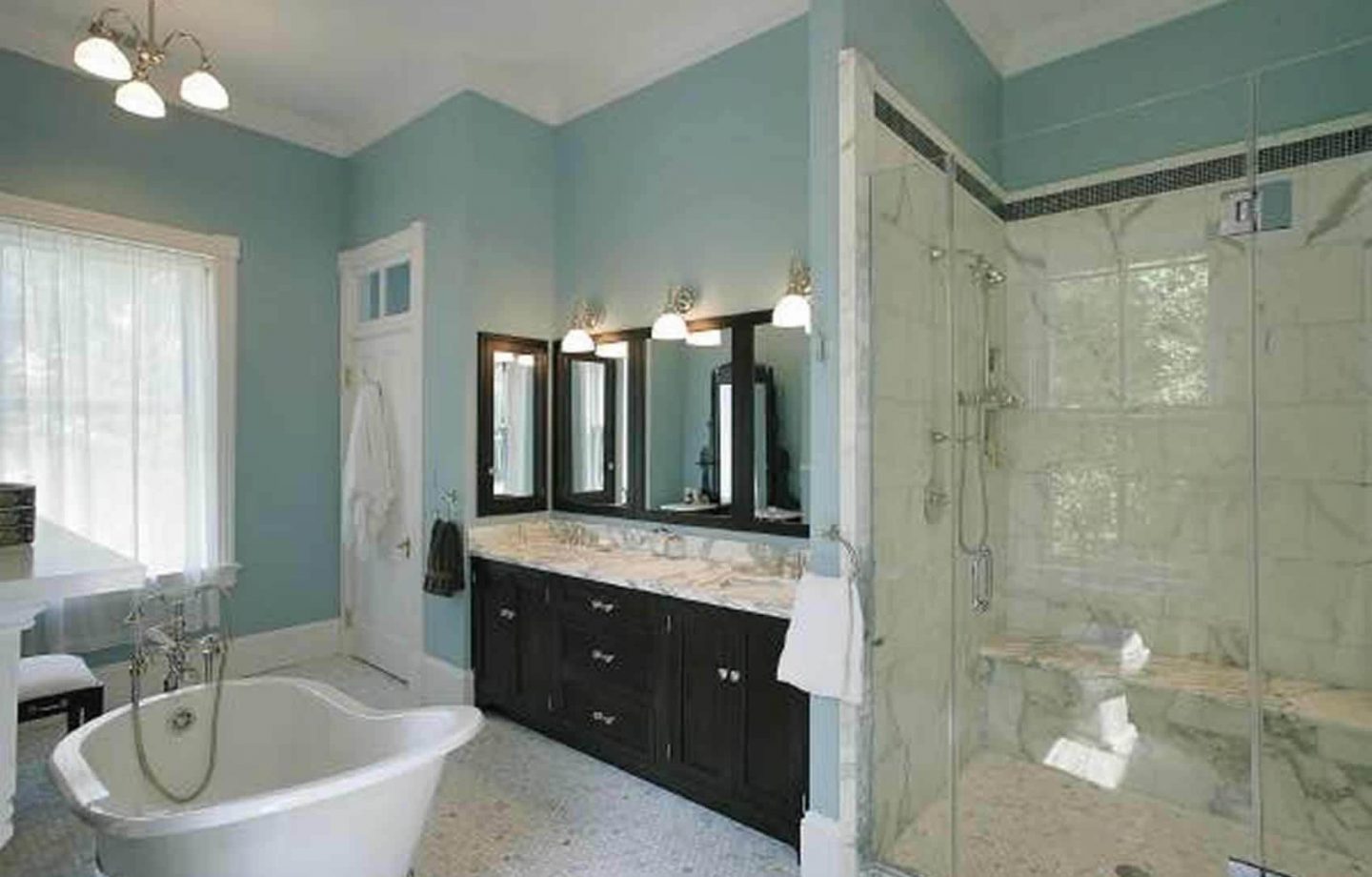
Tile is one of the biggest swing factors. Basic ceramic field tile installs very differently than large-format porcelain, glass mosaic, or natural stone. Intricate patterns, niche details, full-height walls, and custom shower pans all increase labor. So do uneven surfaces that need extra prep. A clean, simple tile plan can still look high-end if the installation is sharp and the materials are chosen well.
Then there are finishes. A vanity can cost a few hundred dollars or several thousand. The same goes for faucets, shower systems, mirrors, and lighting. It is easy to add premium pieces one by one and not notice how quickly the total climbs.
Build the budget in order of importance
The smartest way to budget a bathroom is to fund the things that protect the room first, then move to the things that make it look good.
Start with the bones of the project. That means demolition, framing repair if needed, plumbing, electrical, ventilation, waterproofing, and proper tile installation. These are the parts that keep the bathroom functional and long-lasting. They are not always the exciting line items, but they are the ones that matter most when the room is in daily use.
After that, budget for your key finish items. Usually that means the shower or tub area, the vanity, flooring, toilet, lighting, and paint. If the number starts getting tight, trim back on decorative upgrades before cutting into the core construction quality.
For example, you may not need the most expensive imported tile to get a polished result. You may choose a simpler mirror or a standard vanity width instead of a custom one. You may skip a body spray system and stay with a high-quality shower valve and head. Those choices can save money without sacrificing durability.
How to compare estimates the right way
If you are gathering quotes, make sure you are comparing the same scope. One contractor may include demolition, waterproofing, finish installation, and cleanup, while another only includes part of the job. A lower price does not always mean a better value. Sometimes it just means more is missing.
Ask what is included and what is an allowance. Allowances are estimated budgets for things like tile, fixtures, or vanities that have not been selected yet. They can be helpful, but they can also create confusion if the allowance is unrealistically low. A $500 tile allowance will not go far if you are shopping for premium material.
It also helps to ask how change orders are handled. Even with strong planning, some things shift once the project starts. Clear communication on added costs, timing, and approval matters just as much as the starting number.
For homeowners in Staten Island, older housing stock can make contingency planning even more important. Bathrooms in older homes may hide plumbing updates, floor issues, or moisture damage that only show up during demolition. That does not mean the project should scare you off. It just means the budget should be built like a real construction budget, not a wish list.
Where to save and where not to
There is a right way to save money on a bathroom renovation, and it usually has more to do with simplification than bargain hunting.
Save by keeping the layout if you can. Save by choosing readily available materials instead of special-order products with long lead times. Save by using a straightforward tile pattern rather than a labor-heavy design. Save by mixing one or two standout finish choices with more practical supporting materials.
Do not save by skipping waterproofing steps, hiring based on the lowest number alone, or choosing products that are known to fail early. Cheap fixtures, poor prep work, and rushed tile installation almost always cost more later. Bathrooms are wet rooms. If the workmanship is weak, the damage does not stay cosmetic for long.
This is also why a full-service contractor can make budgeting easier. When one team is managing the work from demo through finish, it is easier to keep the scope tight, the schedule organized, and the budget grounded in the actual job.
Make room for the decisions that happen mid-project
Even a well-planned bathroom remodel has decision points during construction. Maybe the original trim does not fit the new look. Maybe a recessed medicine cabinet makes more sense once the wall is open. Maybe you realize better lighting is worth the upgrade.
That is normal. The key is to know the difference between necessary changes and impulse changes. Necessary changes protect function, safety, or quality. Impulse changes usually come from seeing new possibilities after the project starts. Some are worth it. Some are not. A disciplined budget gives you room to make a few smart adjustments without losing control of the whole job.
A good rule is simple: if an upgrade improves durability, maintenance, or daily use, it deserves stronger consideration than a purely decorative add-on.
Bathroom budgets do not need to be perfect on paper. They need to be honest, realistic, and built around the way the room will actually be used. If you start with the real scope, protect a contingency, and put workmanship ahead of shortcuts, you give yourself a much better shot at a bathroom that looks right, works right, and stays that way long after the dust is gone.